Krebsberatungs-App
Krebsberatungs-App
A Shared Space for Counselors and Patients
A Shared Space for Counselors and Patients
A Shared Space for Counselors and Patients
At-A-Glance:
At-A-Glance:
A human-centered platform uniting cancer patients, their families, and psycho-oncology centers across Germany. Mobile supports patients and relatives; desktop supports counselors, so access is clear, paperwork is lighter, and human care stays primary.
A human-centered platform uniting cancer patients, their families, and psycho-oncology centers across Germany. Mobile supports patients and relatives; desktop supports counselors, so access is clear, paperwork is lighter, and human care stays primary.
A human-centered platform uniting cancer patients, their families, and psycho-oncology centers across Germany. Mobile supports patients and relatives; desktop supports counselors, so access is clear, paperwork is lighter, and human care stays primary.
Krebsberatungs-App
TEAM
TEAM
TEAM
Full-Stack developer
Counselors (Freiburg Cancer Counseling Center)
Researchers (Fraunhofer ISI)
Lead professor (Hochschule Heilbronn).
Full-Stack developer
Counselors (Freiburg Cancer Counseling Center)
Researchers (Fraunhofer ISI)
Lead professor (Hochschule Heilbronn).
MY ROLE
MY ROLE
MY ROLE
Product design
Product design
Product design
INDUSTRY
INDUSTRY
INDUSTRY
HealthTech (psycho-oncological care)
HealthTech (psycho-oncological care)
HealthTech (psycho-oncological care)
PRODUCT TYPE
PRODUCT TYPE
PRODUCT TYPE
B2B2C
B2B2C
B2B2C
TIMELINE
TIMELINE
TIMELINE
12 months
12 months
12 months
12 months
THE PROBLEM?
THE PROBLEM?
Help for cancer exists, but patients can’t get to it.
Help for cancer exists, but patients can’t get to it.
Help for cancer exists, but patients can’t get to it.
Help for cancer exists, but patients can’t get to it.
Patients seeking psycho oncological support often do not know where to start, get lost in paperwork and only find help by accident, while counselors juggle emails, documents and video tools with no single flow to book, share or start sessions. Fraunhofer ISI, Hochschule Heilbronn and the Freiburg Cancer Counseling Center teamed up to create one ecosystem, a mobile app for patients and a web app for counselors and I was brought in to design both.
Cancer is already hard. But in Germany, getting psycho-oncological support? That’s its own kind of maze. 193 centers for 400+ districts meant long forms, phone queues, and families unaware help even existed. It wasn’t a lack of care—it was a lack of access.
Patients seeking psycho oncological support often do not know where to start, get lost in paperwork and only find help by accident, while counselors juggle emails, documents and video tools with no single flow to book, share or start sessions. Fraunhofer ISI, Hochschule Heilbronn and the Freiburg Cancer Counseling Center teamed up to create one ecosystem, a mobile app for patients and a web app for counselors and I was brought in to design both.
Now let me show you the highlights of mobile app for patients:
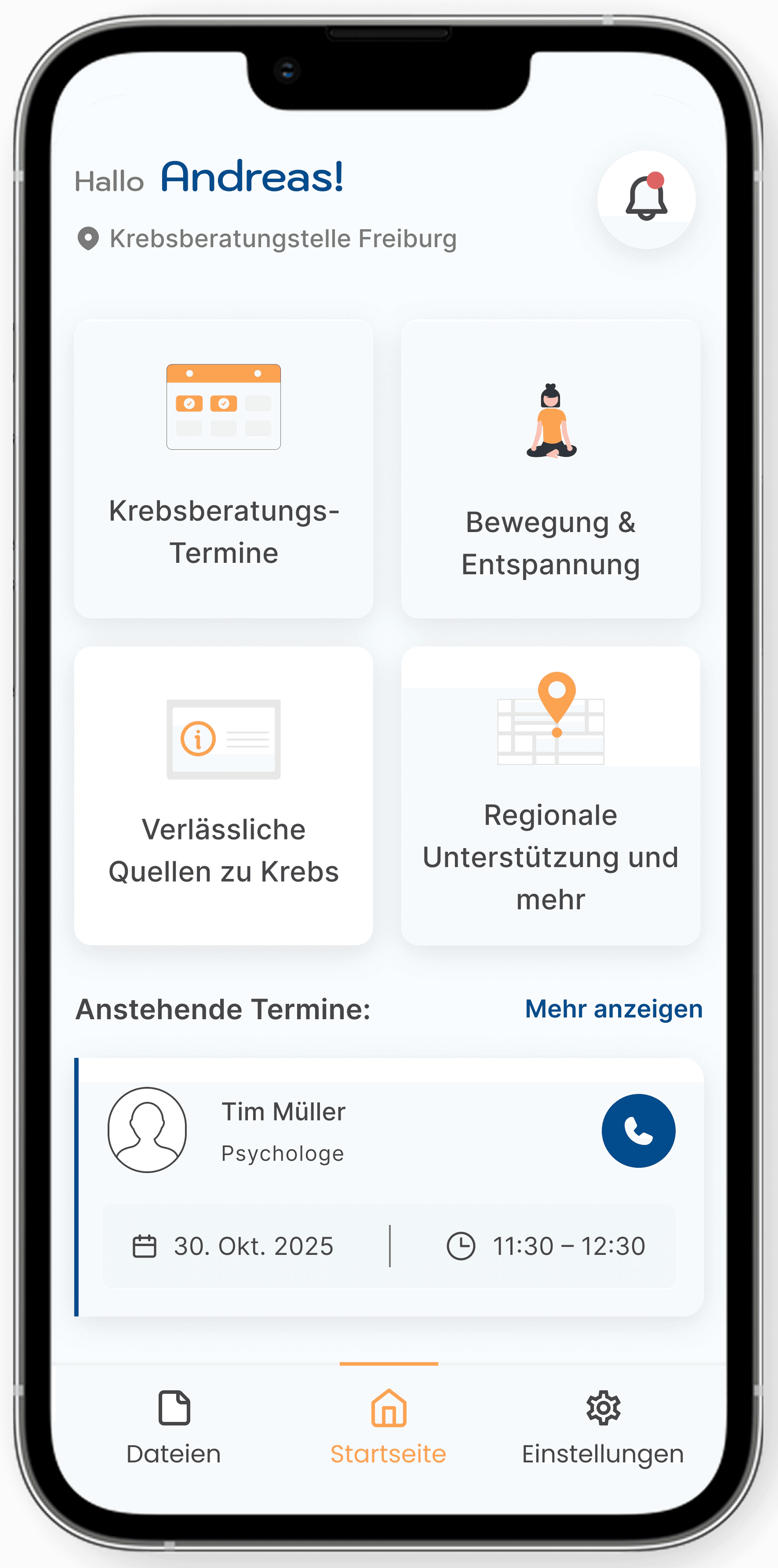
Homepage
Interviews showed patients mainly want to:
Book sessions.
Access reliable info related to cancer.
Find out local and regional support services.
Access quick guided exercises and meditation.
So the homepage is built exactly around those four tiles, plus a clear next-appointment card.
Appointments
This flow replaces blind phone booking with flexibility: patients can review counselor info, see whether a session is online or in person, and use three simple actions—start, change, or book again.
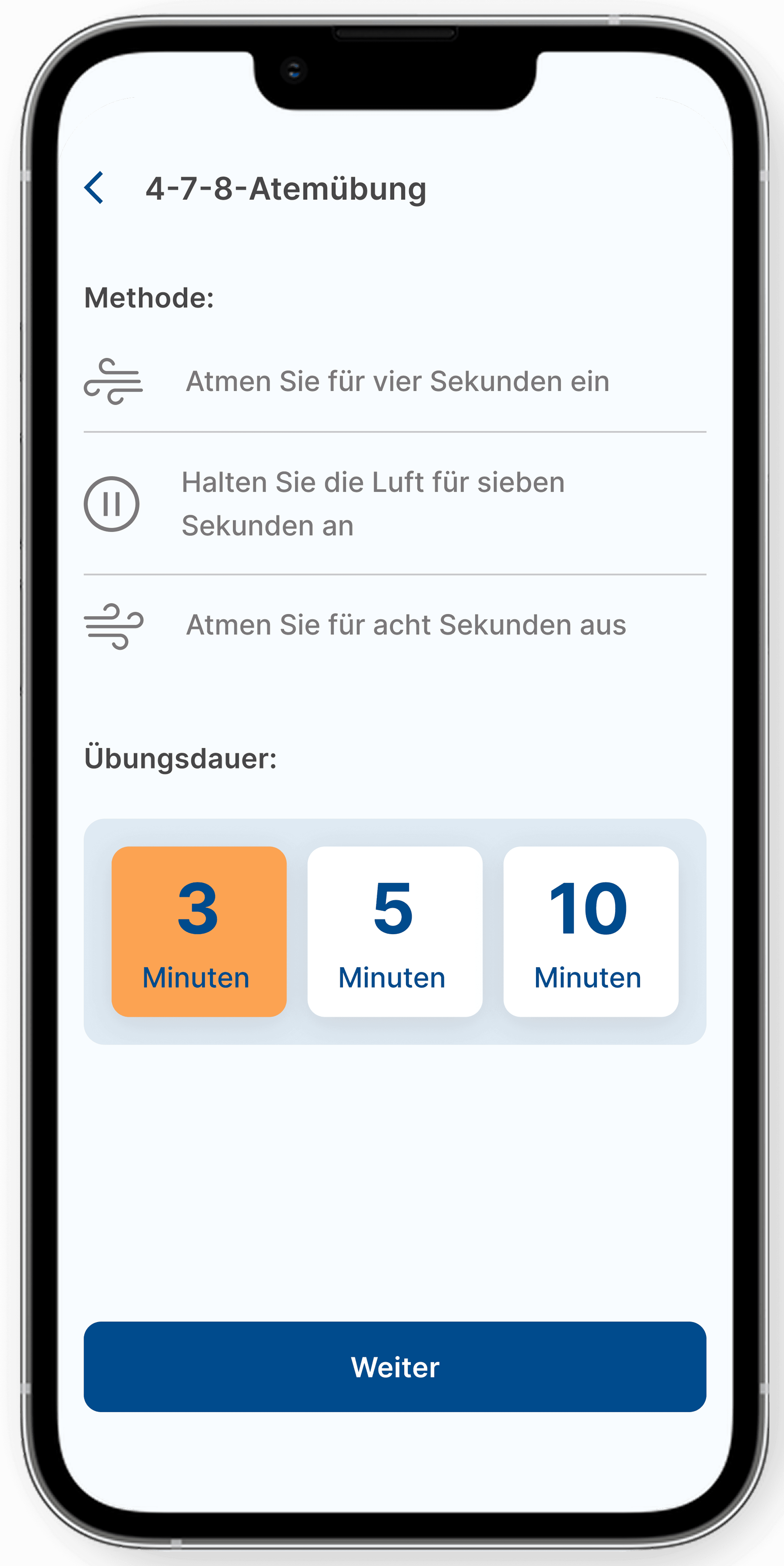
Meditation Coach
Patients asked for fast, calming exercises, especially during stress spikes. So this screen uses minimal text, clear rhythm cues, and a single action button to avoid cognitive load.
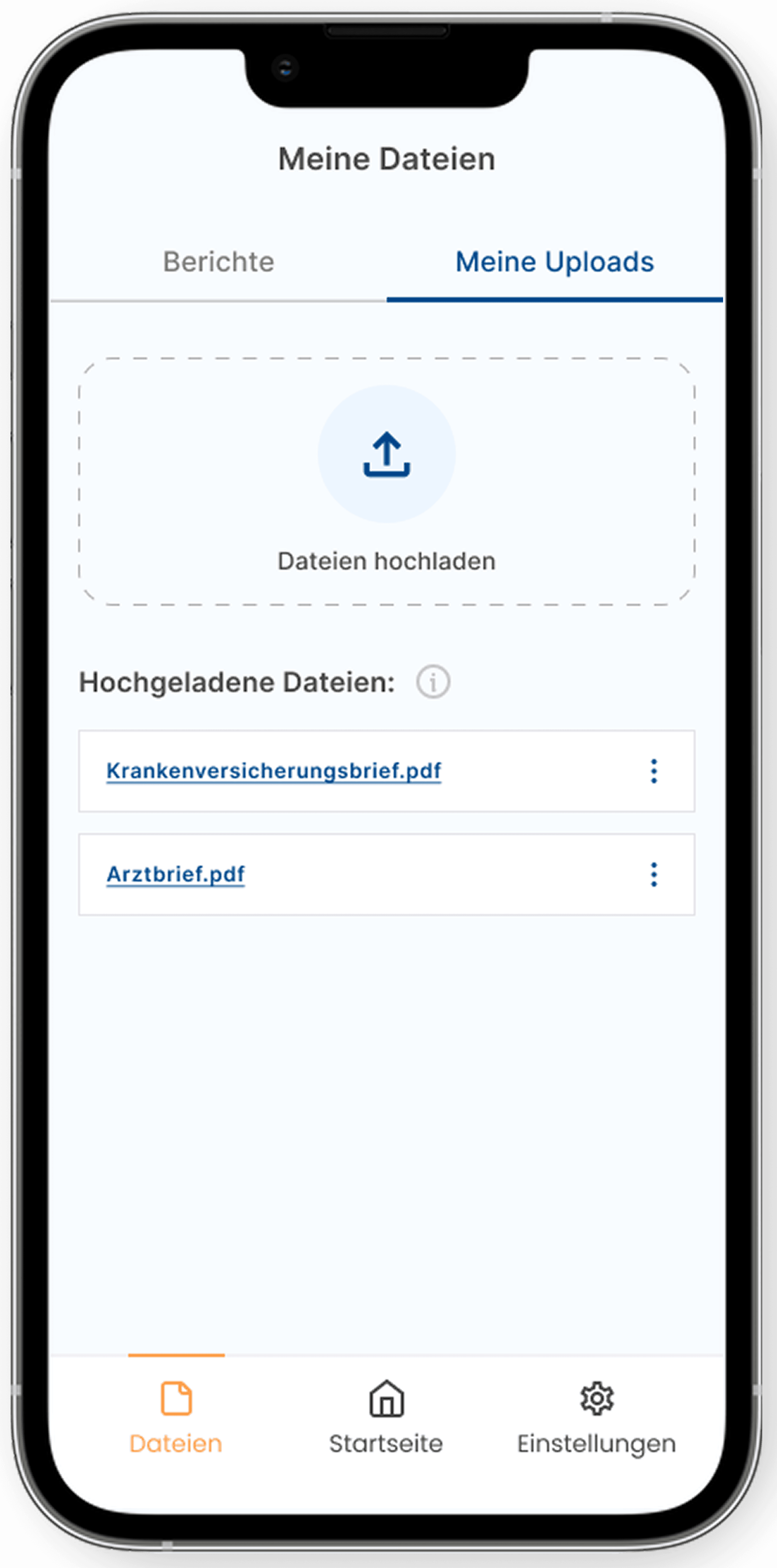
Tidy Documents Drawer
Patients told us they lose documents across emails and folders, so this screen gives them one clear place to upload, store, and share files with counselors.
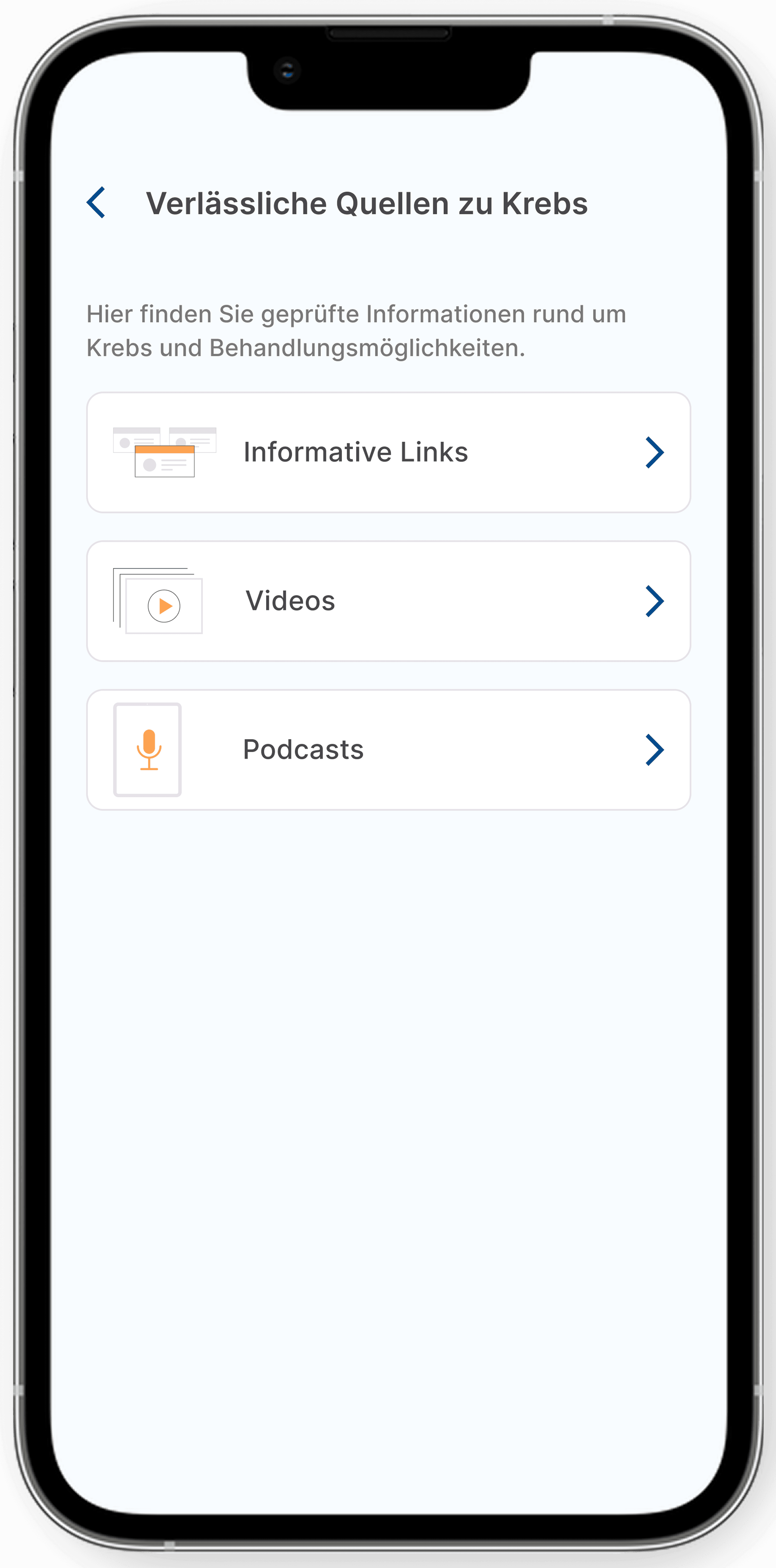
Reliable Cancer Sources
Because patients were exhausted by unreliable cancer information, we added a vetted resource hub; trusted links, videos, and podcasts reviewed by real counseling centers.
Homepage
Interviews showed patients mainly want to:
Book sessions.
Access reliable info related to cancer.
Find out local and regional support services.
Access quick guided exercises and meditation.
So the homepage is built exactly around those four tiles, plus a clear next-appointment card.
Appointments
This flow replaces blind phone booking with flexibility: patients can review counselor info, see whether a session is online or in person, and use three simple actions—start, change, or book again.
Meditation Coach
Patients asked for fast, calming exercises, especially during stress spikes. So this screen uses minimal text, clear rhythm cues, and a single action button to avoid cognitive load.
Tidy Documents Drawer
Patients told us they lose documents across emails and folders, so this screen gives them one clear place to upload, store, and share files with counselors.
Reliable Cancer Sources
Because patients were exhausted by unreliable cancer information, we added a vetted resource hub; trusted links, videos, and podcasts reviewed by real counseling centers.
Homepage
Interviews showed patients mainly want to:
Book sessions.
Access reliable info related to cancer.
Find out local and regional support services.
Access quick guided exercises and meditation.
So the homepage is built exactly around those four tiles, plus a clear next-appointment card.
Appointments
This flow replaces blind phone booking with flexibility: patients can review counselor info, see whether a session is online or in person, and use three simple actions—start, change, or book again.
Meditation Coach
Patients asked for fast, calming exercises, especially during stress spikes. So this screen uses minimal text, clear rhythm cues, and a single action button to avoid cognitive load.
Tidy Documents Drawer
Patients told us they lose documents across emails and folders, so this screen gives them one clear place to upload, store, and share files with counselors.
Reliable Cancer Sources
Because patients were exhausted by unreliable cancer information, we added a vetted resource hub; trusted links, videos, and podcasts reviewed by real counseling centers.
Homepage
Interviews showed patients mainly want to:
Book sessions.
Access reliable info related to cancer.
Find out local and regional support services.
Access quick guided exercises and meditation.
So the homepage is built exactly around those four tiles, plus a clear next-appointment card.
Appointments
This flow replaces blind phone booking with flexibility: patients can review counselor info, see whether a session is online or in person, and use three simple actions—start, change, or book again.
Meditation Coach
Patients asked for fast, calming exercises, especially during stress spikes. So this screen uses minimal text, clear rhythm cues, and a single action button to avoid cognitive load.
Tidy Documents Drawer
Patients told us they lose documents across emails and folders, so this screen gives them one clear place to upload, store, and share files with counselors.
Reliable Cancer Sources
Because patients were exhausted by unreliable cancer information, we added a vetted resource hub; trusted links, videos, and podcasts reviewed by real counseling centers.
Homepage
Interviews showed patients mainly want to:
Book sessions.
Access reliable info related to cancer.
Find out local and regional support services.
Access quick guided exercises and meditation.
So the homepage is built exactly around those four tiles, plus a clear next-appointment card.
Appointments
This flow replaces blind phone booking with flexibility: patients can review counselor info, see whether a session is online or in person, and use three simple actions—start, change, or book again.
Meditation Coach
Patients asked for fast, calming exercises, especially during stress spikes. So this screen uses minimal text, clear rhythm cues, and a single action button to avoid cognitive load.
Tidy Documents Drawer
Patients told us they lose documents across emails and folders, so this screen gives them one clear place to upload, store, and share files with counselors.
Reliable Cancer Sources
Because patients were exhausted by unreliable cancer information, we added a vetted resource hub; trusted links, videos, and podcasts reviewed by real counseling centers.
Homepage
Interviews showed patients mainly want to:
Book sessions.
Access reliable info related to cancer.
Find out local and regional support services.
Access quick guided exercises and meditation.
So the homepage is built exactly around those four tiles, plus a clear next-appointment card.
Appointments
This flow replaces blind phone booking with flexibility: patients can review counselor info, see whether a session is online or in person, and use three simple actions—start, change, or book again.
Meditation Coach
Patients asked for fast, calming exercises, especially during stress spikes. So this screen uses minimal text, clear rhythm cues, and a single action button to avoid cognitive load.
Tidy Documents Drawer
Patients told us they lose documents across emails and folders, so this screen gives them one clear place to upload, store, and share files with counselors.
Reliable Cancer Sources
Because patients were exhausted by unreliable cancer information, we added a vetted resource hub; trusted links, videos, and podcasts reviewed by real counseling centers.
Homepage
Interviews showed patients mainly want to:
Book sessions.
Access reliable info related to cancer.
Find out local and regional support services.
Access quick guided exercises and meditation.
So the homepage is built exactly around those four tiles, plus a clear next-appointment card.
Appointments
This flow replaces blind phone booking with flexibility: patients can review counselor info, see whether a session is online or in person, and use three simple actions—start, change, or book again.
Meditation Coach
Patients asked for fast, calming exercises, especially during stress spikes. So this screen uses minimal text, clear rhythm cues, and a single action button to avoid cognitive load.
Tidy Documents Drawer
Patients told us they lose documents across emails and folders, so this screen gives them one clear place to upload, store, and share files with counselors.
Reliable Cancer Sources
Because patients were exhausted by unreliable cancer information, we added a vetted resource hub; trusted links, videos, and podcasts reviewed by real counseling centers.
Homepage
Interviews showed patients mainly want to:
Book sessions.
Access reliable info related to cancer.
Find out local and regional support services.
Access quick guided exercises and meditation.
So the homepage is built exactly around those four tiles, plus a clear next-appointment card.
Appointments
This flow replaces blind phone booking with flexibility: patients can review counselor info, see whether a session is online or in person, and use three simple actions—start, change, or book again.
Meditation Coach
Patients asked for fast, calming exercises, especially during stress spikes. So this screen uses minimal text, clear rhythm cues, and a single action button to avoid cognitive load.
Tidy Documents Drawer
Patients told us they lose documents across emails and folders, so this screen gives them one clear place to upload, store, and share files with counselors.
Reliable Cancer Sources
Because patients were exhausted by unreliable cancer information, we added a vetted resource hub; trusted links, videos, and podcasts reviewed by real counseling centers.
Homepage
Interviews showed patients mainly want to:
Book sessions.
Access reliable info related to cancer.
Find out local and regional support services.
Access quick guided exercises and meditation.
So the homepage is built exactly around those four tiles, plus a clear next-appointment card.
Appointments
This flow replaces blind phone booking with flexibility: patients can review counselor info, see whether a session is online or in person, and use three simple actions—start, change, or book again.
Meditation Coach
Patients asked for fast, calming exercises, especially during stress spikes. So this screen uses minimal text, clear rhythm cues, and a single action button to avoid cognitive load.
Tidy Documents Drawer
Patients told us they lose documents across emails and folders, so this screen gives them one clear place to upload, store, and share files with counselors.
Reliable Cancer Sources
Because patients were exhausted by unreliable cancer information, we added a vetted resource hub; trusted links, videos, and podcasts reviewed by real counseling centers.
Homepage
Interviews showed patients mainly want to:
Book sessions.
Access reliable info related to cancer.
Find out local and regional support services.
Access quick guided exercises and meditation.
So the homepage is built exactly around those four tiles, plus a clear next-appointment card.
Appointments
This flow replaces blind phone booking with flexibility: patients can review counselor info, see whether a session is online or in person, and use three simple actions—start, change, or book again.
Meditation Coach
Patients asked for fast, calming exercises, especially during stress spikes. So this screen uses minimal text, clear rhythm cues, and a single action button to avoid cognitive load.
Tidy Documents Drawer
Patients told us they lose documents across emails and folders, so this screen gives them one clear place to upload, store, and share files with counselors.
Reliable Cancer Sources
Because patients were exhausted by unreliable cancer information, we added a vetted resource hub; trusted links, videos, and podcasts reviewed by real counseling centers.
Homepage
Interviews showed patients mainly want to:
Book sessions.
Access reliable info related to cancer.
Find out local and regional support services.
Access quick guided exercises and meditation.
So the homepage is built exactly around those four tiles, plus a clear next-appointment card.
Appointments
This flow replaces blind phone booking with flexibility: patients can review counselor info, see whether a session is online or in person, and use three simple actions—start, change, or book again.
Meditation Coach
Patients asked for fast, calming exercises, especially during stress spikes. So this screen uses minimal text, clear rhythm cues, and a single action button to avoid cognitive load.
Tidy Documents Drawer
Patients told us they lose documents across emails and folders, so this screen gives them one clear place to upload, store, and share files with counselors.
Reliable Cancer Sources
Because patients were exhausted by unreliable cancer information, we added a vetted resource hub; trusted links, videos, and podcasts reviewed by real counseling centers.
Homepage
Interviews showed patients mainly want to:
Book sessions.
Access reliable info related to cancer.
Find out local and regional support services.
Access quick guided exercises and meditation.
So the homepage is built exactly around those four tiles, plus a clear next-appointment card.
Appointments
This flow replaces blind phone booking with flexibility: patients can review counselor info, see whether a session is online or in person, and use three simple actions—start, change, or book again.
Meditation Coach
Patients asked for fast, calming exercises, especially during stress spikes. So this screen uses minimal text, clear rhythm cues, and a single action button to avoid cognitive load.
Tidy Documents Drawer
Patients told us they lose documents across emails and folders, so this screen gives them one clear place to upload, store, and share files with counselors.
Reliable Cancer Sources
Because patients were exhausted by unreliable cancer information, we added a vetted resource hub; trusted links, videos, and podcasts reviewed by real counseling centers.
Homepage
Interviews showed patients mainly want to:
Book sessions.
Access reliable info related to cancer.
Find out local and regional support services.
Access quick guided exercises and meditation.
So the homepage is built exactly around those four tiles, plus a clear next-appointment card.
Appointments
This flow replaces blind phone booking with flexibility: patients can review counselor info, see whether a session is online or in person, and use three simple actions—start, change, or book again.
Meditation Coach
Patients asked for fast, calming exercises, especially during stress spikes. So this screen uses minimal text, clear rhythm cues, and a single action button to avoid cognitive load.
Tidy Documents Drawer
Patients told us they lose documents across emails and folders, so this screen gives them one clear place to upload, store, and share files with counselors.
Reliable Cancer Sources
Because patients were exhausted by unreliable cancer information, we added a vetted resource hub; trusted links, videos, and podcasts reviewed by real counseling centers.
Homepage
Interviews showed patients mainly want to:
Book sessions.
Access reliable info related to cancer.
Find out local and regional support services.
Access quick guided exercises and meditation.
So the homepage is built exactly around those four tiles, plus a clear next-appointment card.
Appointments
This flow replaces blind phone booking with flexibility: patients can review counselor info, see whether a session is online or in person, and use three simple actions—start, change, or book again.
Meditation Coach
Patients asked for fast, calming exercises, especially during stress spikes. So this screen uses minimal text, clear rhythm cues, and a single action button to avoid cognitive load.
Tidy Documents Drawer
Patients told us they lose documents across emails and folders, so this screen gives them one clear place to upload, store, and share files with counselors.
Reliable Cancer Sources
Because patients were exhausted by unreliable cancer information, we added a vetted resource hub; trusted links, videos, and podcasts reviewed by real counseling centers.
Homepage
Interviews showed patients mainly want to:
Book sessions.
Access reliable info related to cancer.
Find out local and regional support services.
Access quick guided exercises and meditation.
So the homepage is built exactly around those four tiles, plus a clear next-appointment card.
Appointments
This flow replaces blind phone booking with flexibility: patients can review counselor info, see whether a session is online or in person, and use three simple actions—start, change, or book again.
Meditation Coach
Patients asked for fast, calming exercises, especially during stress spikes. So this screen uses minimal text, clear rhythm cues, and a single action button to avoid cognitive load.
Tidy Documents Drawer
Patients told us they lose documents across emails and folders, so this screen gives them one clear place to upload, store, and share files with counselors.
Reliable Cancer Sources
Because patients were exhausted by unreliable cancer information, we added a vetted resource hub; trusted links, videos, and podcasts reviewed by real counseling centers.
Homepage
Interviews showed patients mainly want to:
Book sessions.
Access reliable info related to cancer.
Find out local and regional support services.
Access quick guided exercises and meditation.
So the homepage is built exactly around those four tiles, plus a clear next-appointment card.
Appointments
This flow replaces blind phone booking with flexibility: patients can review counselor info, see whether a session is online or in person, and use three simple actions—start, change, or book again.
Meditation Coach
Patients asked for fast, calming exercises, especially during stress spikes. So this screen uses minimal text, clear rhythm cues, and a single action button to avoid cognitive load.
Tidy Documents Drawer
Patients told us they lose documents across emails and folders, so this screen gives them one clear place to upload, store, and share files with counselors.
Reliable Cancer Sources
Because patients were exhausted by unreliable cancer information, we added a vetted resource hub; trusted links, videos, and podcasts reviewed by real counseling centers.
——
01.EMPATHIZE
——
01.EMPATHIZE
——
01.EMPATHIZE
"Second-hand research gives you data, but first-hand research gives you empathy"
"Second-hand research gives you data, but first-hand research gives you empathy"

Therefore, even with prior research available, I did my own.
Therefore, even with prior research available, I did my own.
Even with Freinet and Fraunhofer research available, I wanted first hand insight to avoid blind spots and hear needs in users’ own words. I started with secondary research, reviewing guidelines, health reports and existing cancer apps, and found that:
Even with Freinet and Fraunhofer research available, I wanted first hand insight to avoid blind spots and hear needs in users’ own words. I started with secondary research, reviewing guidelines, health reports and existing cancer apps, and found that:
#1 The Need is Real
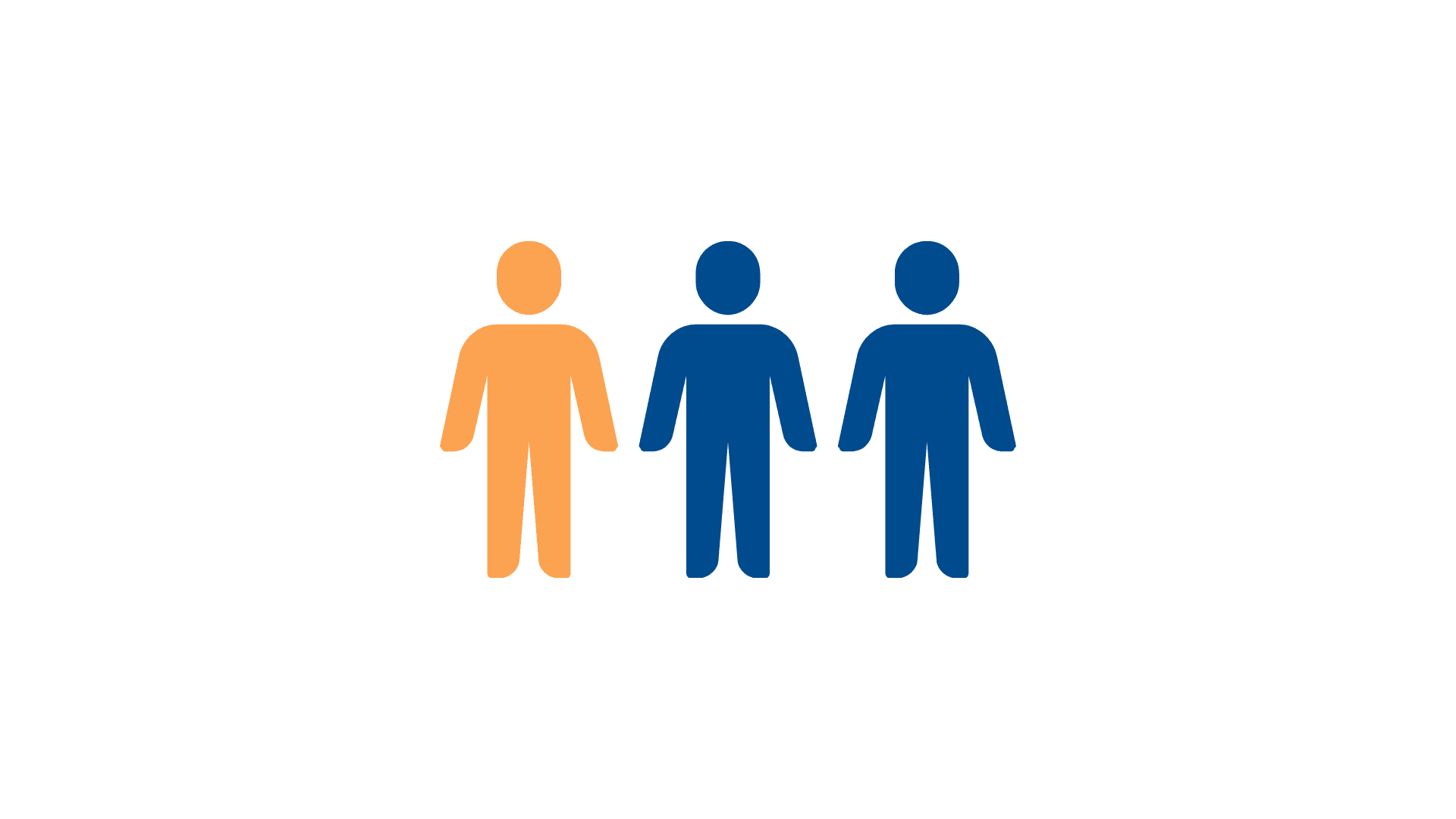
I learned that about one in three people diagnosed with cancer requires psycho-oncological support at some point.
#2 Family Members Struggle Just as Much as Patients
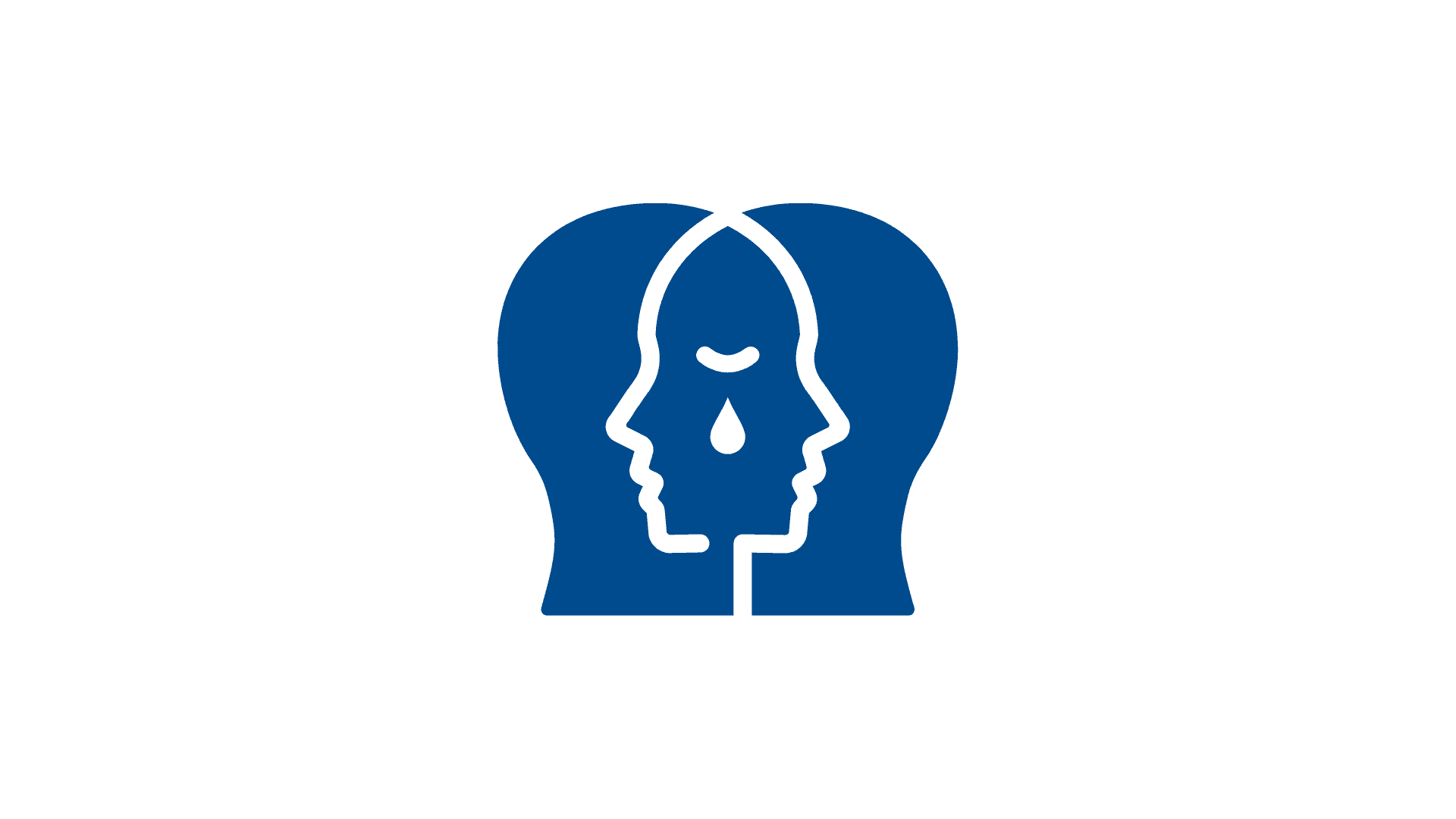
Research highlights that family members of cancer patients often experience serious psychological strain, sometimes equal to or greater than the patients themselves.
#3 Limited Reach:Too Few Psycho-Oncology Centers for the Country’s Needs
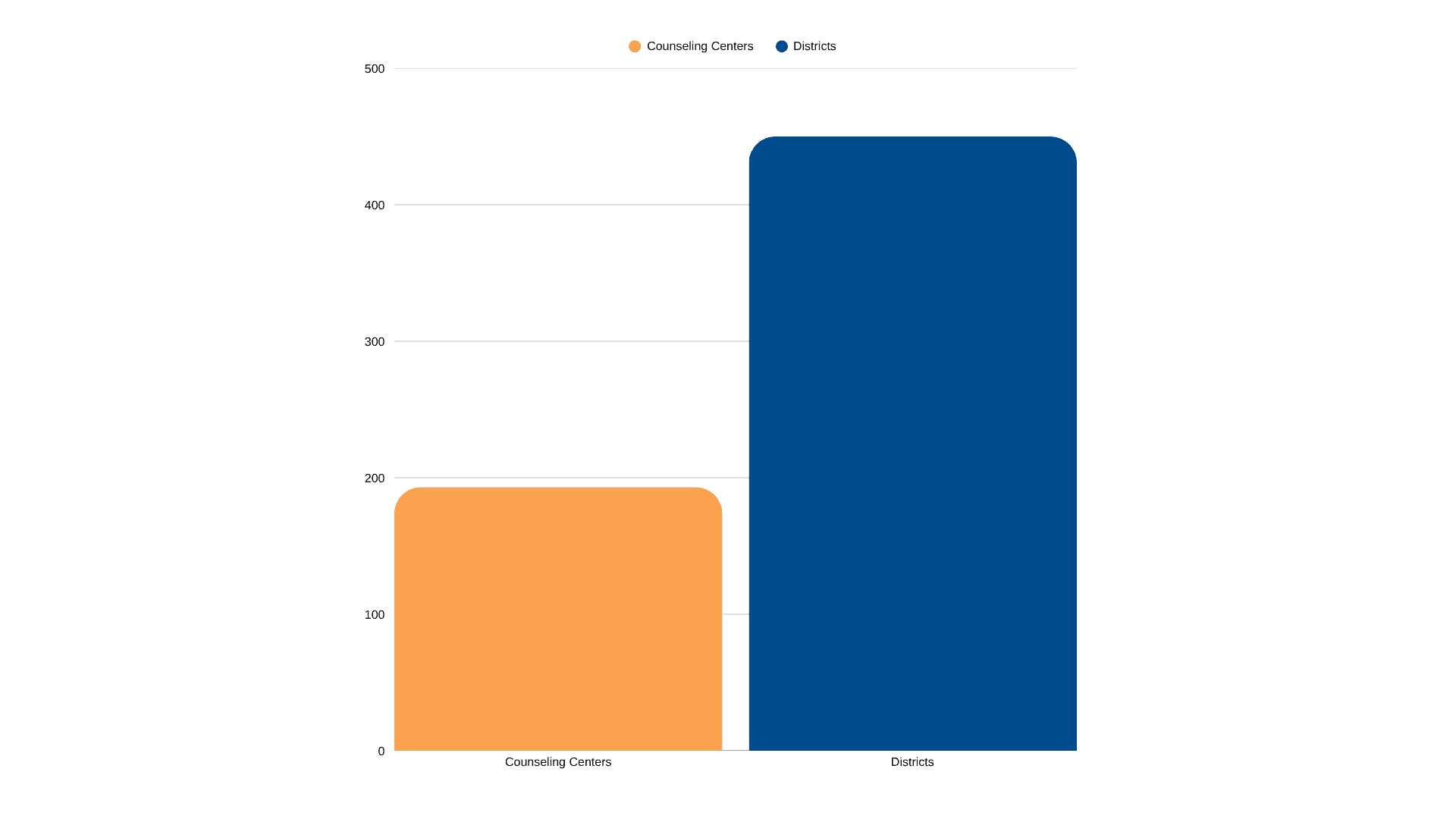
Despite national guidelines promising equal access to psychosocial care, the country still struggles with limited reach: about 193 psychosocial counseling centers exist across ~400 districts.
Current Apps Educate Patients, But Don’t Connect Them to Real Counselors
Strong symptom/education apps existed (e.g., MIKA; PINK! Coach as a DiGA), but none linked people to real counseling centers with scheduling, documents, or follow-ups.
#5 The Solution Fits the Moment
With most people already using smartphones, bringing support into one simple digital place became the easiest way to help patients find, book, and manage care.
#1 The Need is Real
I learned that about one in three people diagnosed with cancer requires psycho-oncological support at some point.
#2 Family Members Struggle Just as Much as Patients
Research highlights that family members of cancer patients often experience serious psychological strain, sometimes equal to or greater than the patients themselves.
#3 Limited Reach:Too Few Psycho-Oncology Centers for the Country’s Needs
Despite national guidelines promising equal access to psychosocial care, the country still struggles with limited reach: about 193 psychosocial counseling centers exist across ~400 districts.
Current Apps Educate Patients, But Don’t Connect Them to Real Counselors
Strong symptom/education apps existed (e.g., MIKA; PINK! Coach as a DiGA), but none linked people to real counseling centers with scheduling, documents, or follow-ups.
#5 The Solution Fits the Moment
With most people already using smartphones, bringing support into one simple digital place became the easiest way to help patients find, book, and manage care.
#1 The Need is Real
I learned that about one in three people diagnosed with cancer requires psycho-oncological support at some point.
#2 Family Members Struggle Just as Much as Patients
Research highlights that family members of cancer patients often experience serious psychological strain, sometimes equal to or greater than the patients themselves.
#3 Limited Reach:Too Few Psycho-Oncology Centers for the Country’s Needs
Despite national guidelines promising equal access to psychosocial care, the country still struggles with limited reach: about 193 psychosocial counseling centers exist across ~400 districts.
Current Apps Educate Patients, But Don’t Connect Them to Real Counselors
Strong symptom/education apps existed (e.g., MIKA; PINK! Coach as a DiGA), but none linked people to real counseling centers with scheduling, documents, or follow-ups.
#5 The Solution Fits the Moment
With most people already using smartphones, bringing support into one simple digital place became the easiest way to help patients find, book, and manage care.
#1 The Need is Real
I learned that about one in three people diagnosed with cancer requires psycho-oncological support at some point.
#2 Family Members Struggle Just as Much as Patients
Research highlights that family members of cancer patients often experience serious psychological strain, sometimes equal to or greater than the patients themselves.
#3 Limited Reach:Too Few Psycho-Oncology Centers for the Country’s Needs
Despite national guidelines promising equal access to psychosocial care, the country still struggles with limited reach: about 193 psychosocial counseling centers exist across ~400 districts.
Current Apps Educate Patients, But Don’t Connect Them to Real Counselors
Strong symptom/education apps existed (e.g., MIKA; PINK! Coach as a DiGA), but none linked people to real counseling centers with scheduling, documents, or follow-ups.
#5 The Solution Fits the Moment
With most people already using smartphones, bringing support into one simple digital place became the easiest way to help patients find, book, and manage care.
#1 The Need is Real
I learned that about one in three people diagnosed with cancer requires psycho-oncological support at some point.
#2 Family Members Struggle Just as Much as Patients
Research highlights that family members of cancer patients often experience serious psychological strain, sometimes equal to or greater than the patients themselves.
#3 Limited Reach:Too Few Psycho-Oncology Centers for the Country's Needs
Despite national guidelines promising equal access to psychosocial care, the country still struggles with limited reach: about 193 psychosocial counseling centers exist across ~400 districts.
Current Apps Educate Patients, But Don’t Connect Them to Real Counselors
Strong symptom/education apps existed (e.g., MIKA; PINK! Coach as a DiGA), but none linked people to real counseling centers with scheduling, documents, or follow-ups.
#5 The Solution Fits the Moment
With most people already using smartphones, bringing support into one simple digital place became the easiest way to help patients find, book, and manage care.
#1 The Need is Real
I learned that about one in three people diagnosed with cancer requires psycho-oncological support at some point.
#2 Family Members Struggle Just as Much as Patients
Research highlights that family members of cancer patients often experience serious psychological strain, sometimes equal to or greater than the patients themselves.
#3 Limited Reach:Too Few Psycho-Oncology Centers for the Country's Needs
Despite national guidelines promising equal access to psychosocial care, the country still struggles with limited reach: about 193 psychosocial counseling centers exist across ~400 districts.
Current Apps Educate Patients, But Don’t Connect Them to Real Counselors
Strong symptom/education apps existed (e.g., MIKA; PINK! Coach as a DiGA), but none linked people to real counseling centers with scheduling, documents, or follow-ups.
#5 The Solution Fits the Moment
With most people already using smartphones, bringing support into one simple digital place became the easiest way to help patients find, book, and manage care.
#1 The Need is Real
I learned that about one in three people diagnosed with cancer requires psycho-oncological support at some point.
#2 Family Members Struggle Just as Much as Patients
Research highlights that family members of cancer patients often experience serious psychological strain, sometimes equal to or greater than the patients themselves.
#3 Limited Reach:Too Few Psycho-Oncology Centers for the Country's Needs
Despite national guidelines promising equal access to psychosocial care, the country still struggles with limited reach: about 193 psychosocial counseling centers exist across ~400 districts.
Current Apps Educate Patients, But Don’t Connect Them to Real Counselors
Strong symptom/education apps existed (e.g., MIKA; PINK! Coach as a DiGA), but none linked people to real counseling centers with scheduling, documents, or follow-ups.
#5 The Solution Fits the Moment
With most people already using smartphones, bringing support into one simple digital place became the easiest way to help patients find, book, and manage care.
#1 The Need is Real
I learned that about one in three people diagnosed with cancer requires psycho-oncological support at some point.
#2 Family Members Struggle Just as Much as Patients
Research highlights that family members of cancer patients often experience serious psychological strain, sometimes equal to or greater than the patients themselves.
#3 Limited Reach:Too Few Psycho-Oncology Centers for the Country's Needs
Despite national guidelines promising equal access to psychosocial care, the country still struggles with limited reach: about 193 psychosocial counseling centers exist across ~400 districts.
Current Apps Educate Patients, But Don’t Connect Them to Real Counselors
Strong symptom/education apps existed (e.g., MIKA; PINK! Coach as a DiGA), but none linked people to real counseling centers with scheduling, documents, or follow-ups.
#5 The Solution Fits the Moment
With most people already using smartphones, bringing support into one simple digital place became the easiest way to help patients find, book, and manage care.
Interviews revealed a clear mismatch between patient and counselor priorities.
Interviews revealed a clear mismatch between patient and counselor priorities.
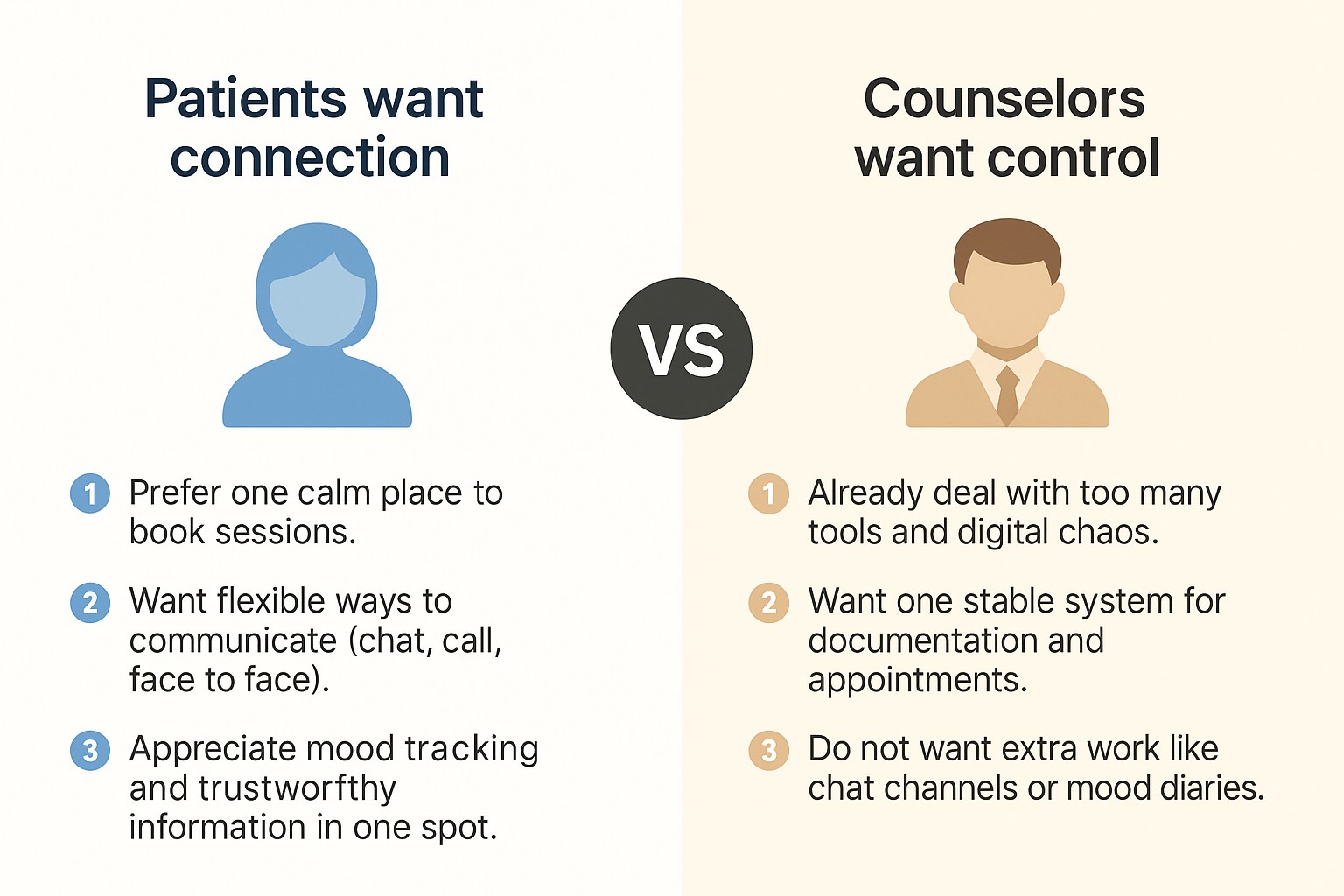
I spent weeks on the floor(virtually), running remote interviews and conversations with patients (n=6) and counselors (n=5) to understand their day-to-day reality. As a result, clear split in expectations surfaced:
I spent weeks on the floor(virtually), running remote interviews and conversations with patients (n=6) and counselors (n=5) to understand their day-to-day reality. As a result, clear split in expectations surfaced:
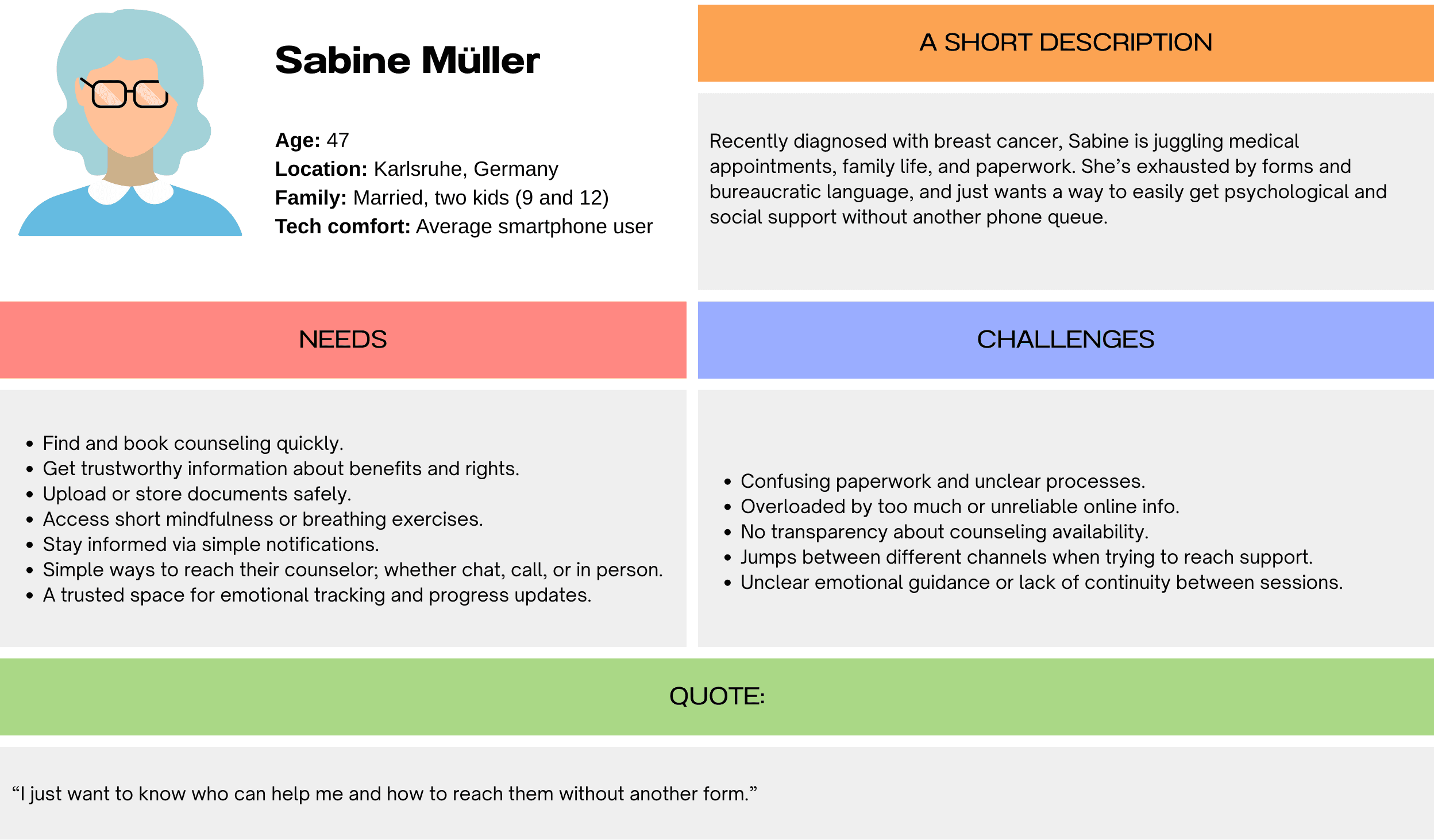
Using interview insights, I built personas and journeys that kept the team close to patients and counselors.
Using interview insights, I built personas and journeys that kept the team close to patients and counselors.
Patient Persona:
Counselor Persona:
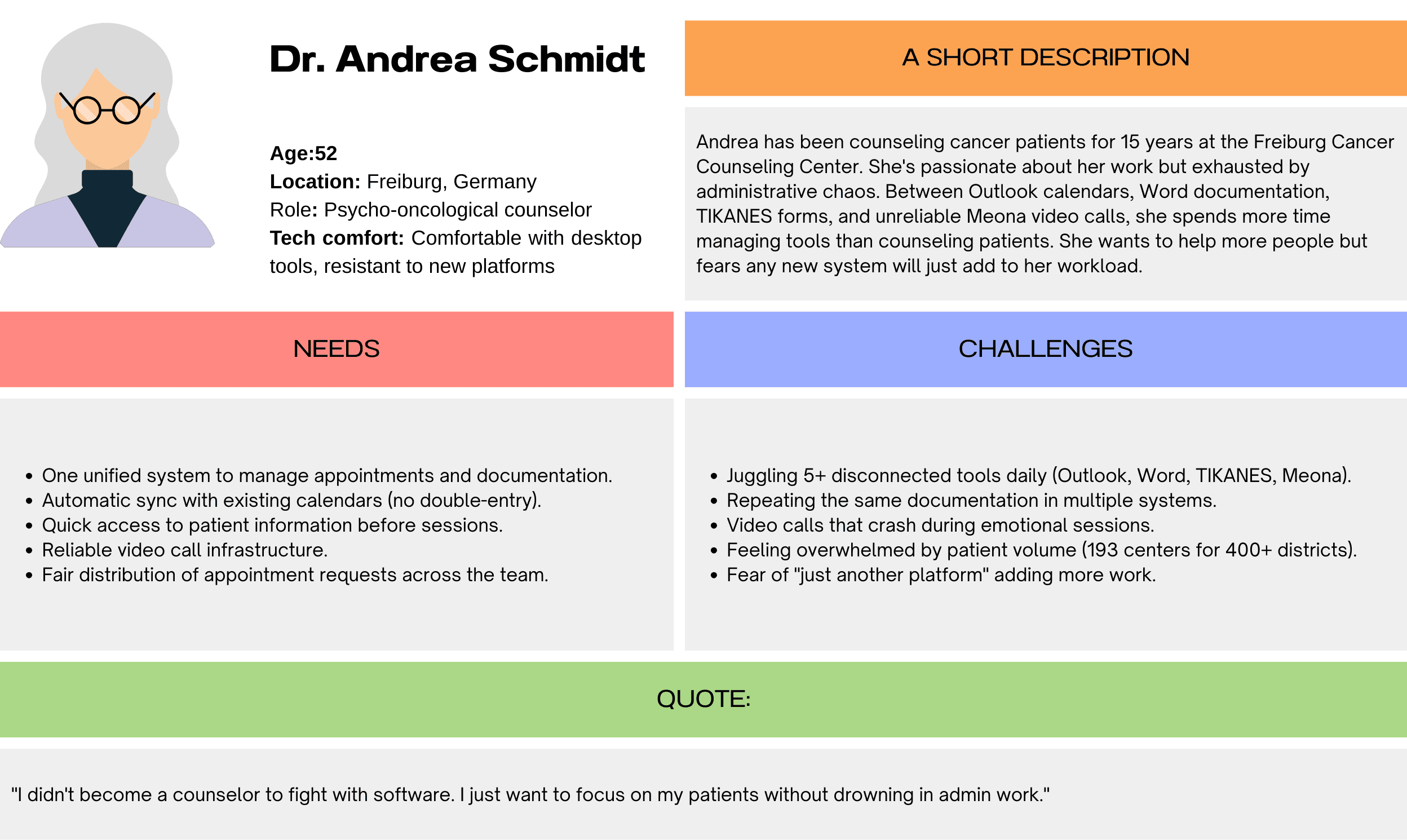
Patient Persona:
Counselor Persona:
Patient Persona:
Counselor Persona:
Patient Persona:
Counselor Persona:
Patient Journey Map:
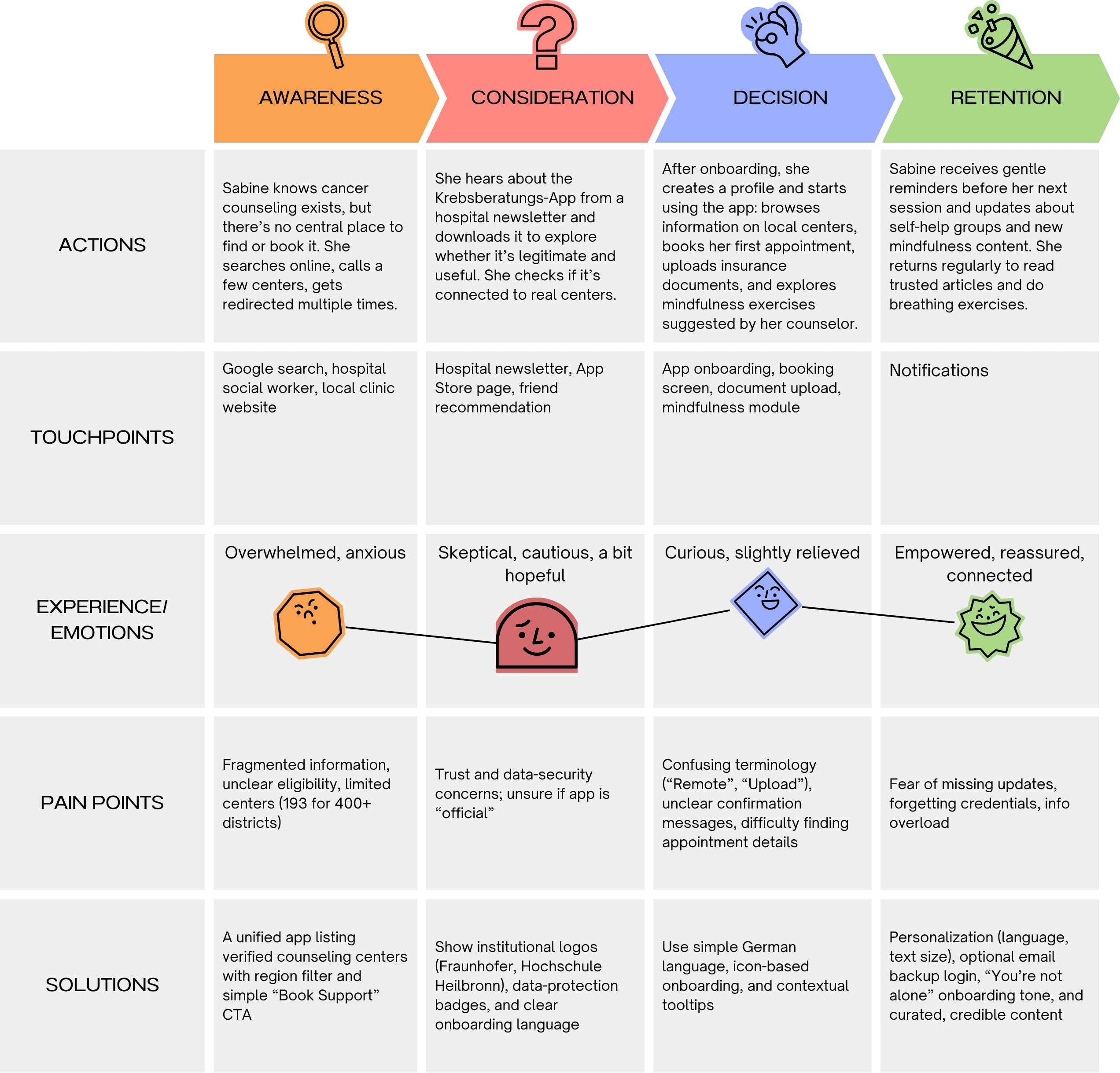
Counselor Journey Map
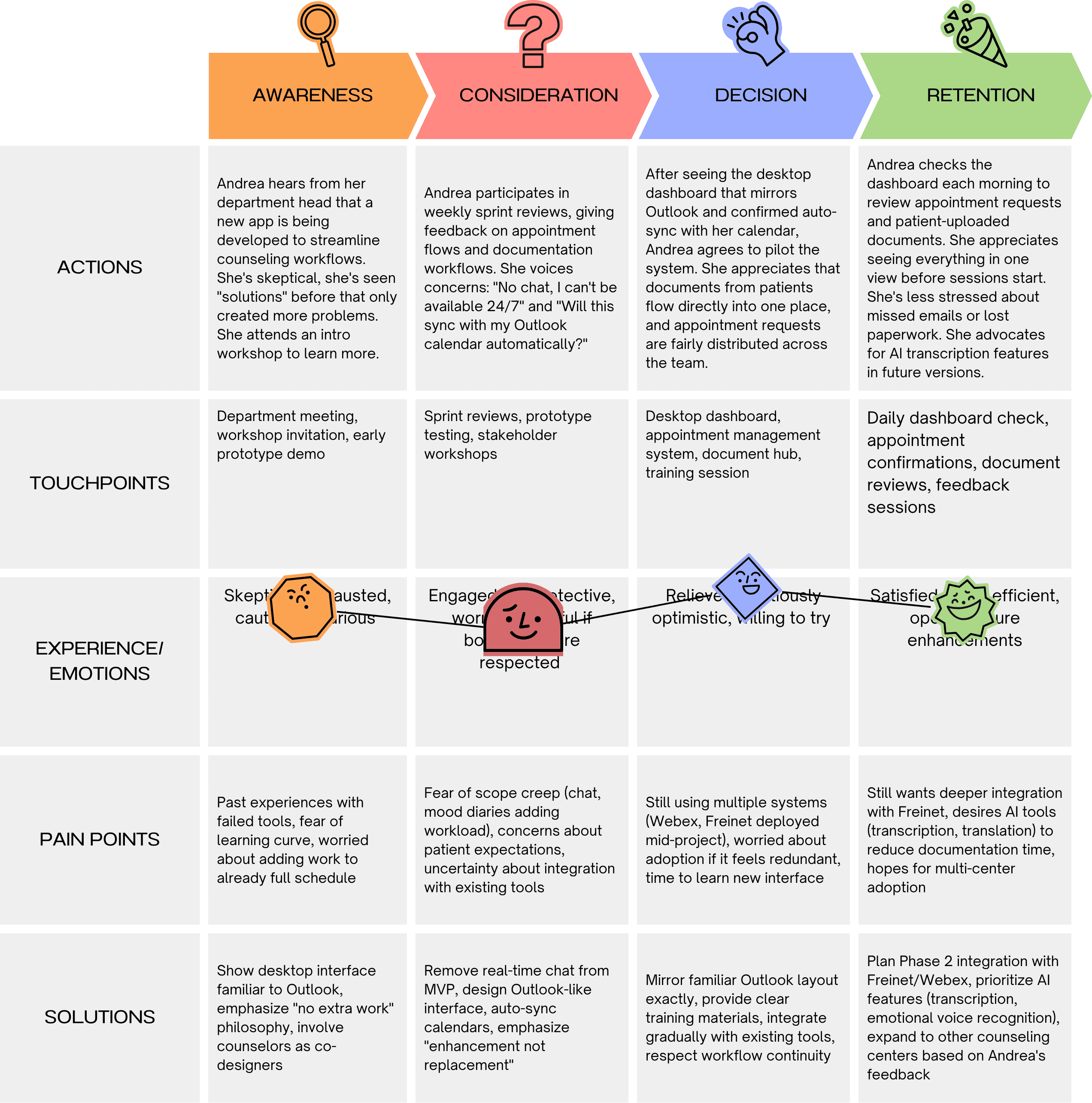
Patient Journey Map:
Counselor Journey Map
Patient Journey Map:
Counselor Journey Map
Patient Journey Map:
Counselor Journey Map
Patient Persona:
Counselor Persona:
Patient Persona:
Counselor Persona:
Patient Persona:
Counselor Persona:
Patient Persona:
Counselor Persona:
Patient Journey Map:
Counselor Journey Map
Patient Journey Map:
Counselor Journey Map
Patient Journey Map:
Counselor Journey Map
Patient Journey Map:
Counselor Journey Map
Patient Journey Map:
Counselor Journey Map
Patient Journey Map:
Counselor Journey Map
Patient Journey Map:
Counselor Journey Map
Patient Journey Map:
Counselor Journey Map
Patient Persona:
Counselor Persona:
Patient Persona:
Counselor Persona:
Patient Persona:
Counselor Persona:
Patient Persona:
Counselor Persona:
——
03.IDEATE
——
03.IDEATE
——
03.IDEATE
We used co-design sprints to unpack and address each patient–counselor conflict.
We used co-design sprints to unpack and address each patient–counselor conflict.
In these co-design sprints within the team, we turned a messy wish list into concrete requirements, working through each patient–counselor conflict and either finding a middle ground or clearly prioritizing one side.
In these co-design sprints within the team, we turned a messy wish list into concrete requirements, working through each patient–counselor conflict and either finding a middle ground or clearly prioritizing one side.
In these co-design sprints within the team, we turned a messy wish list into concrete requirements, working through each patient–counselor conflict and either finding a middle ground or clearly prioritizing one side.
Patients Said:
Patients Said:
Patients Said:
Counselors Said:
Counselors Said:
Counselors Said:
What We Decided (MVP):
What We Decided (MVP):
What We Decided (MVP):
1.
“I just want to book a session without waiting on the phone.”
“I just want to book a session without waiting on the phone.”
“We already manage Outlook, Meona, and other calendars; please don’t give us another tool to update.”
“We already manage Outlook, Meona, and other calendars; please don’t give us another tool to update.”
Built self-service appointment booking synced automatically with counselor schedules; no double work.
Built self-service appointment booking synced automatically with counselor schedules; no double work.
2.
“I live too far away; I need a simple, secure way to talk to my counselor online.”
“I live too far away; I need a simple, secure way to talk to my counselor online.”
“Our current video tool (Meona) is unstable. We need a reliable, GDPR-compliant solution.”
“Our current video tool (Meona) is unstable. We need a reliable, GDPR-compliant solution.”
Added a secure, GDPR-compliant video calling system that works reliably
Added a secure, GDPR-compliant video calling system that works reliably
3.
“I want to message my counselor whenever I’m anxious or need help.
“I want to message my counselor whenever I’m anxious or need help.
“No chat, please. I don’t have time to answer messages.
“No chat, please. I don’t have time to answer messages.
Removed chat. As the counselors did not have any capacity to negotiate on this feature.
Removed chat. As the counselors did not have any capacity to negotiate on this feature.
4.
“I don’t trust random websites. I want reliable information I can actually use.”
“I don’t trust random websites. I want reliable information I can actually use.”
“Patients often bring printouts from Google; it’s exhausting to fact-check.”
“Patients often bring printouts from Google; it’s exhausting to fact-check.”
Added a verified information hub, curated with Freiburg Cancer Center experts; reliable, readable, and constantly updated.
Added a verified information hub, curated with Freiburg Cancer Center experts; reliable, readable, and constantly updated.
6
“It’s so much paperwork; I never know which form goes where.”
“It’s so much paperwork; I never know which form goes where.”
“We lose time emailing PDFs back and forth.”
“We lose time emailing PDFs back and forth.”
Added a secure document exchange, centralized for both sides.
Added a secure document exchange, centralized for both sides.
5.
“Tracking my emotional state via a mood diary would help me discuss patterns with my counselor.”
“Tracking my emotional state via a mood diary would help me discuss patterns with my counselor.”
“No please, because if patients share their mood diary with me, I will obligated to read it and it will definitely be a lot to read for every patient”
“No please, because if patients share their mood diary with me, I will obligated to read it and it will definitely be a lot to read for every patient”
Removed the mood diary. Kept emotional support via guided breathing exercises, vetted wellness articles and booking for appointment instead.
Removed the mood diary. Kept emotional support via guided breathing exercises, vetted wellness articles and booking for appointment instead.
7.
“It’s hard to read small text or find things when I’m tired.”
“It’s hard to read small text or find things when I’m tired.”
“Older patients struggle with tech; we need to make this foolproof.”
“Older patients struggle with tech; we need to make this foolproof.”
Added accessibility settings, text resizing, night mode, and simplified labels in plain German. Designed for clarity, not clutter.
Added accessibility settings, text resizing, night mode, and simplified labels in plain German. Designed for clarity, not clutter.
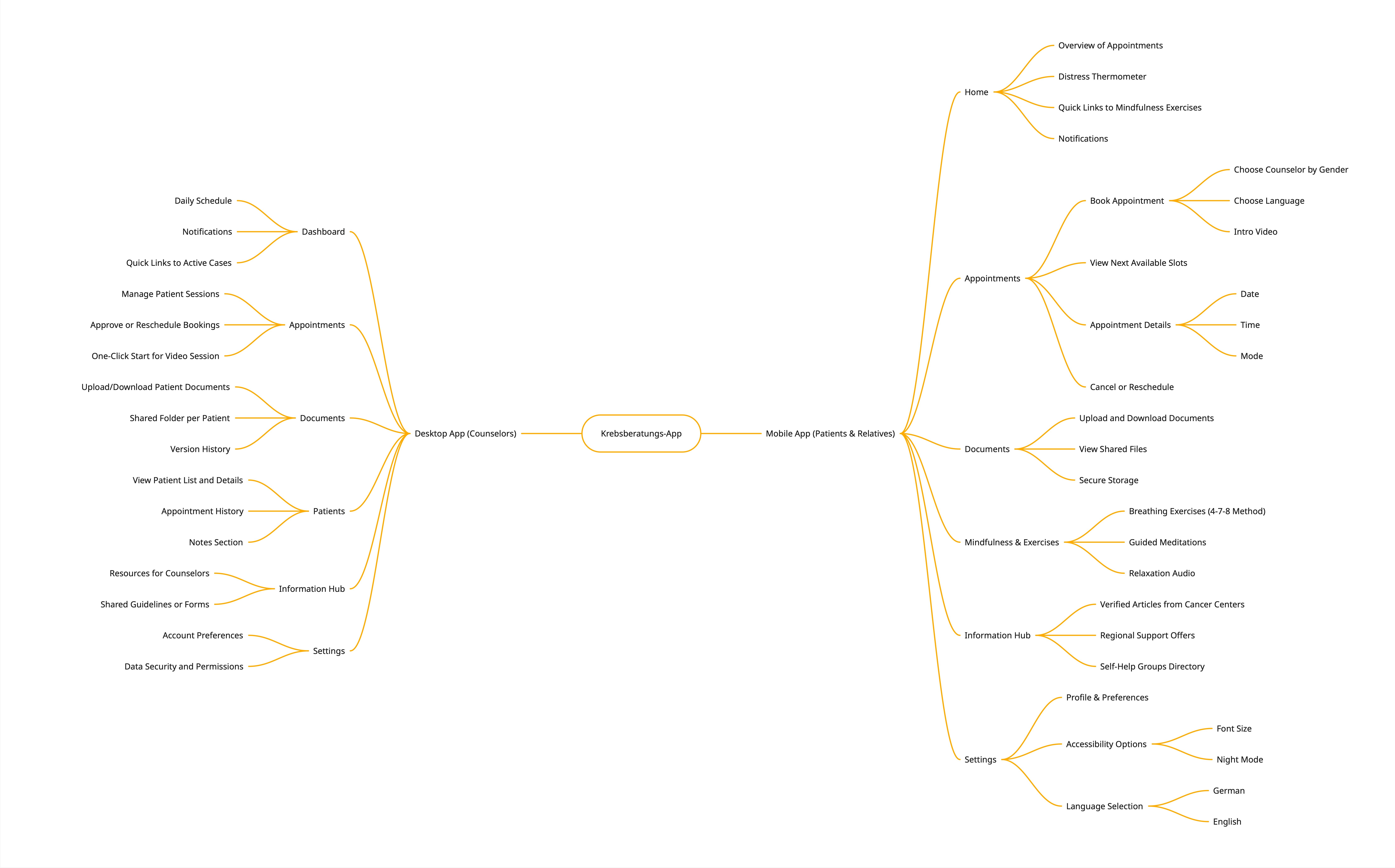
Afterwards, I mapped the entire product to bring clarity to the scope.
Afterwards, I mapped the entire product to bring clarity to the scope.
———
04.PROTOTYPE
———
04.PROTOTYPE
———
04.PROTOTYPE
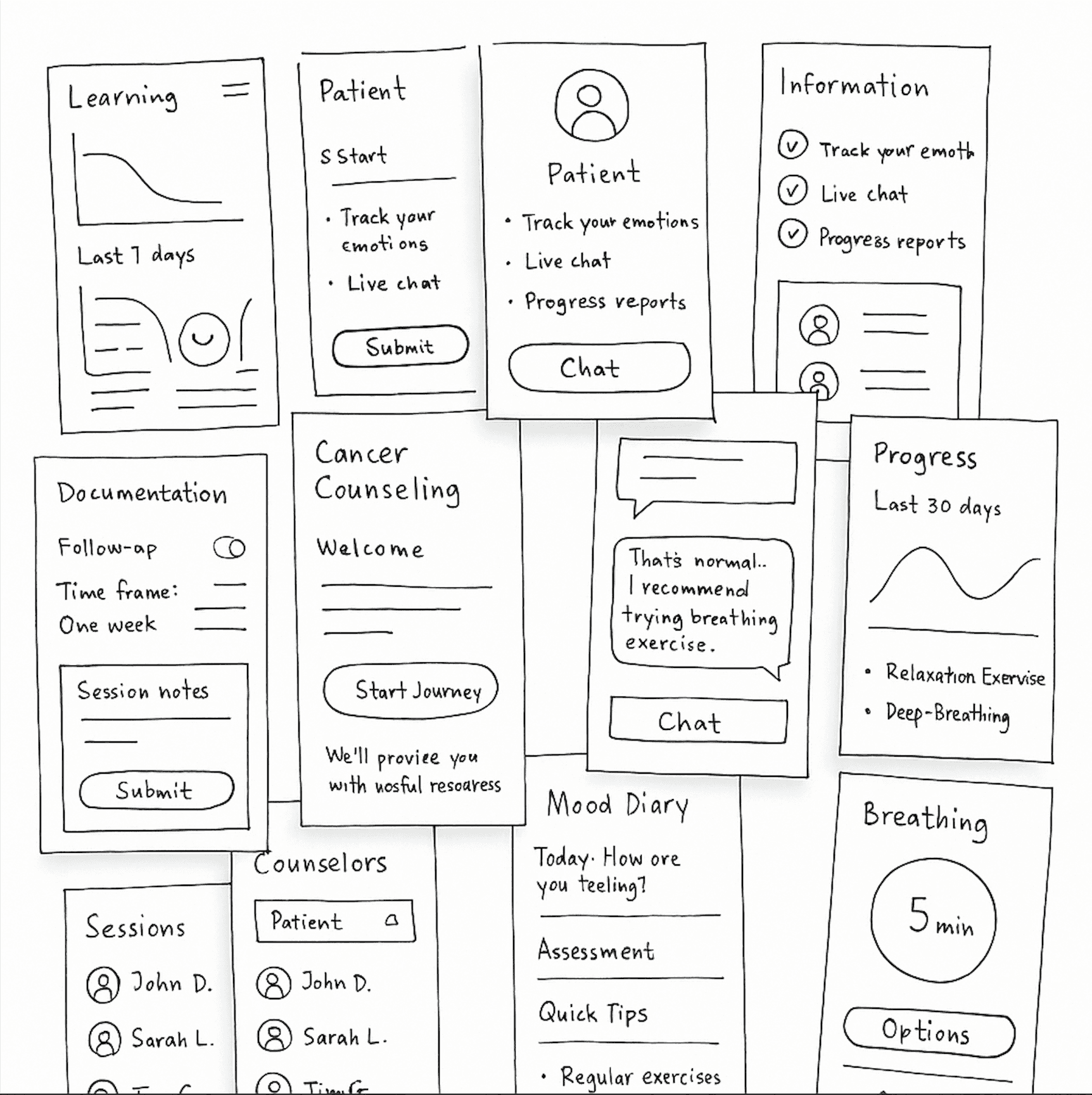
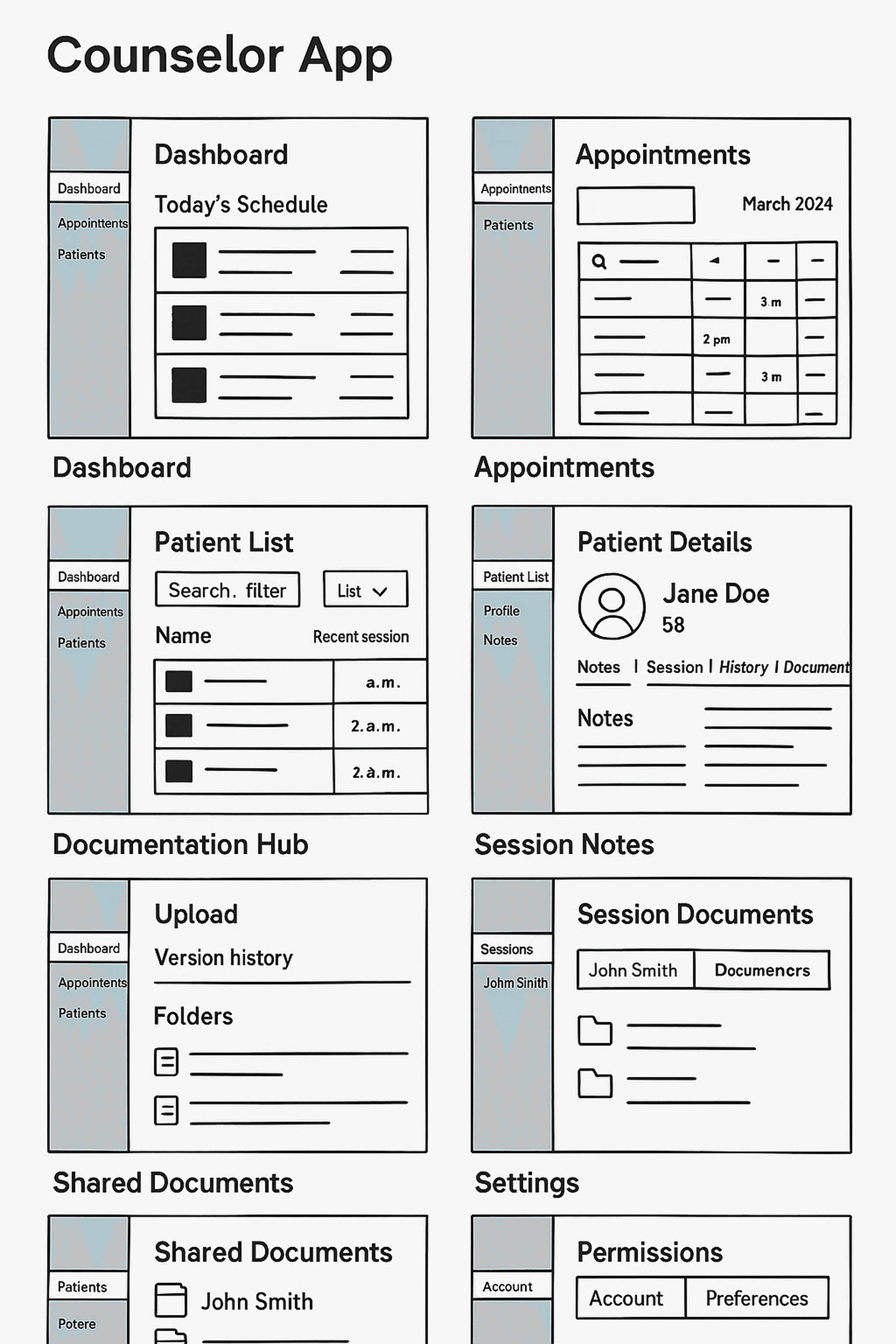
I started with wireframes: Lo-Fi Desktop and Mobile screens, got tested and refined several rounds.
I started with wireframes: Lo-Fi Desktop and Mobile screens, got tested and refined several rounds.
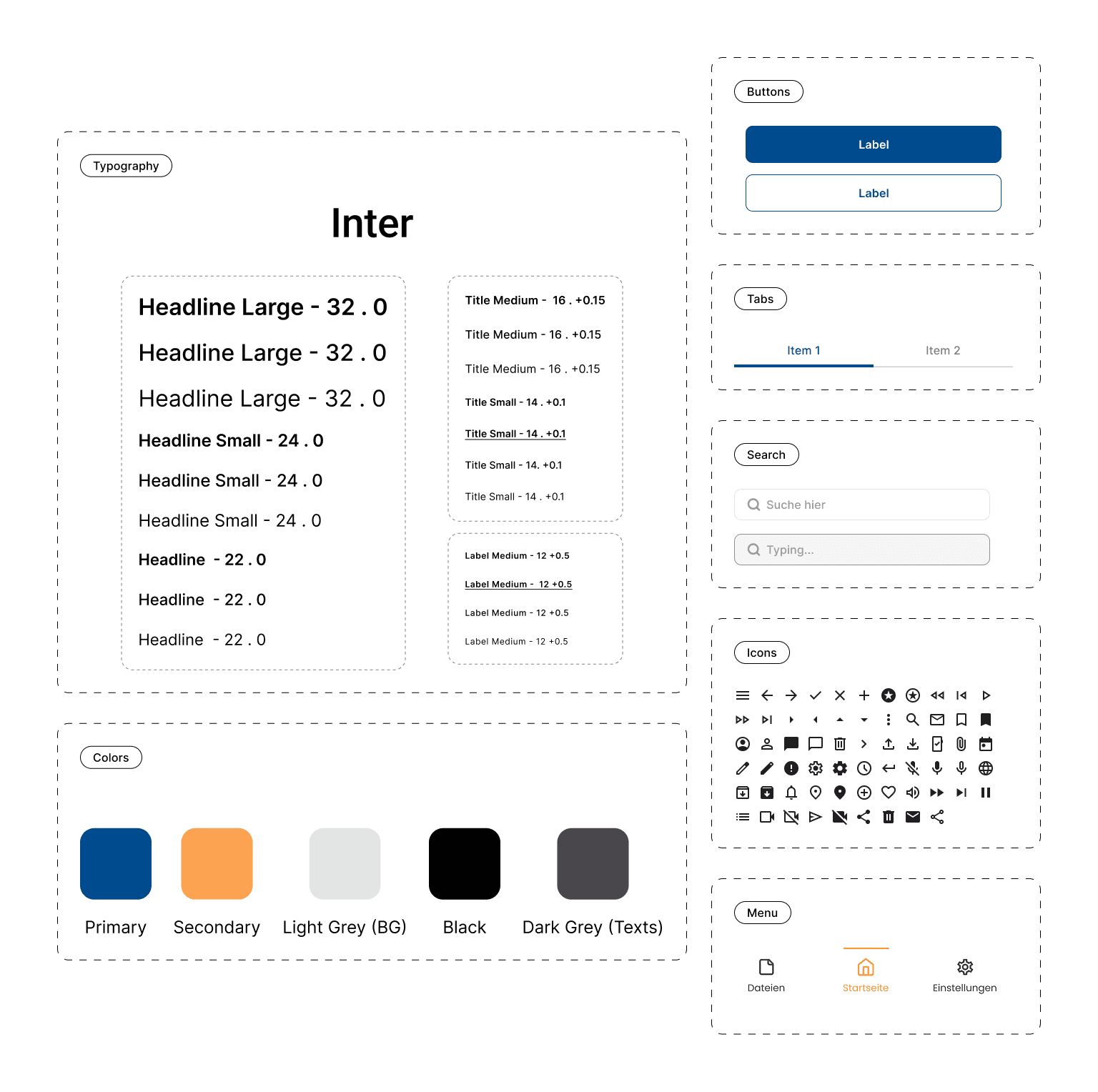
I then adapted Material 3 into a cohesive, accessible design system.
I then adapted Material 3 into a cohesive, accessible design system.
And below are the highlights of the desktop app for counselors:
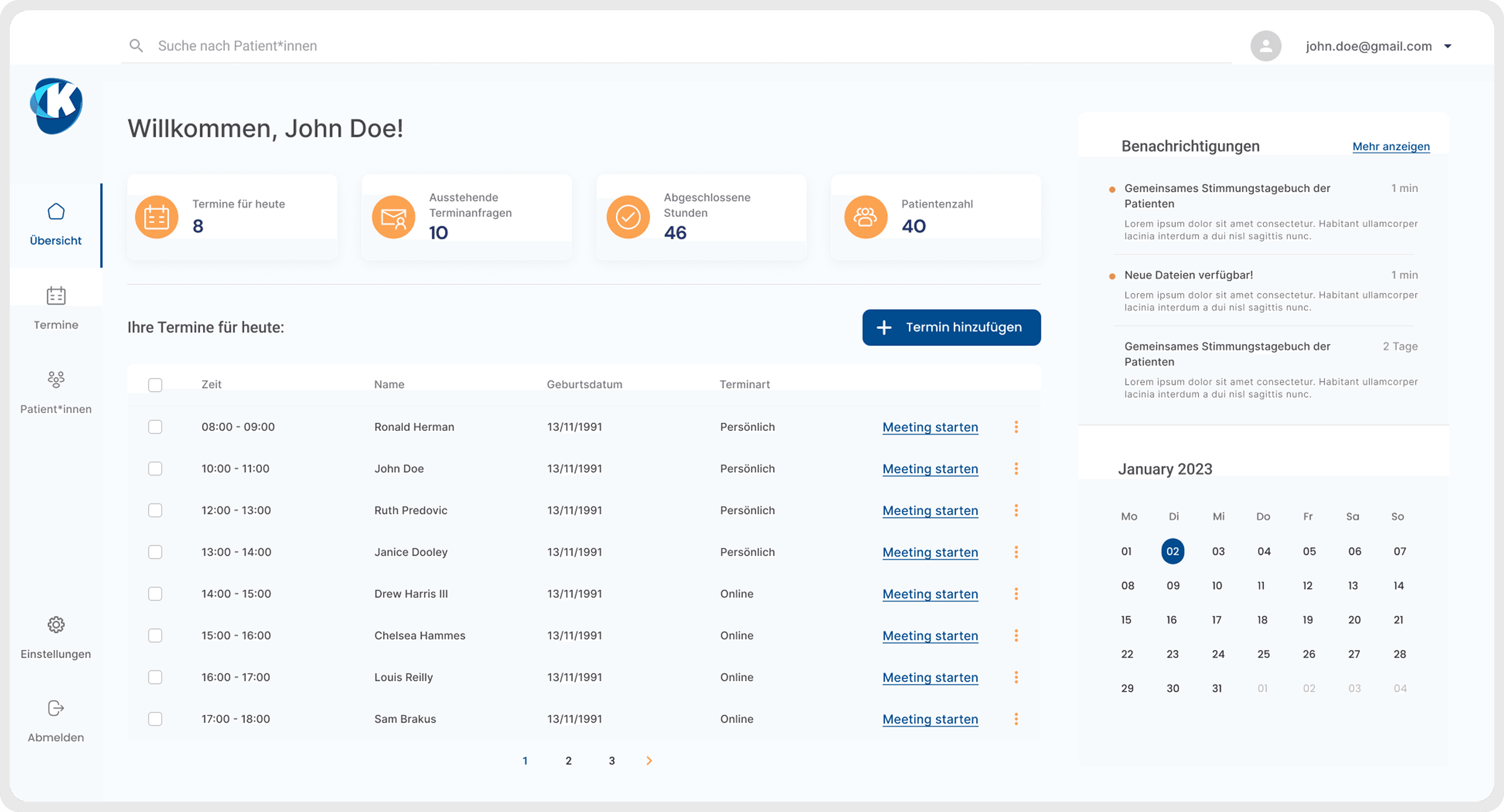
Homepage
Counselors asked for “one place to see everything.” The homepage delivers that: live schedule, incoming requests, updates, and documents; reducing prep time and eliminating tool-hopping.
Appointment Management
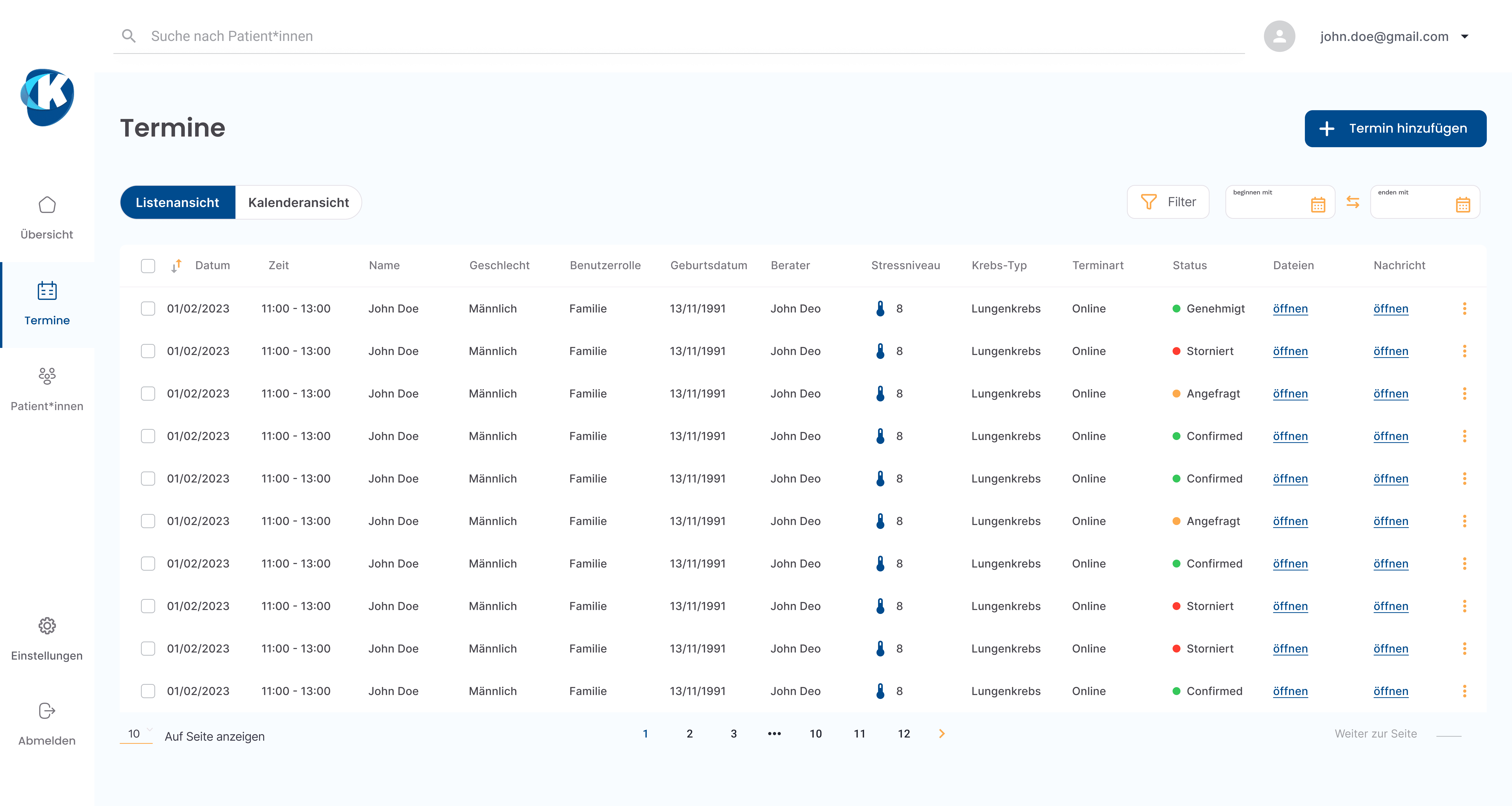
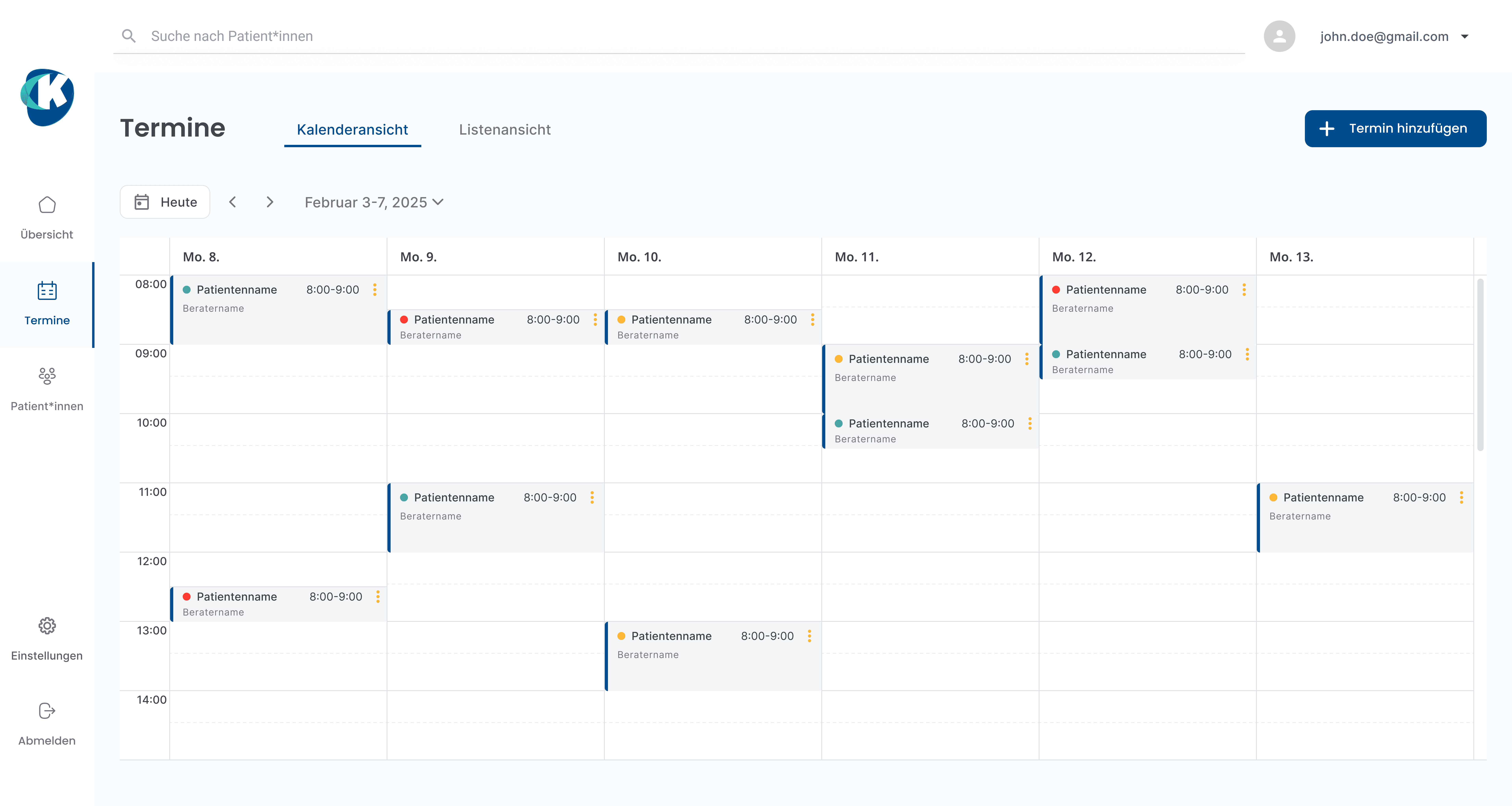
User research revealed counselors needed one trustworthy system for sessions; something their current mix of Outlook and Meona couldn’t provide. This unified calendar gives them one place to view, start, reschedule, or organize appointments without jumping between tools.
Patient Documents Overview
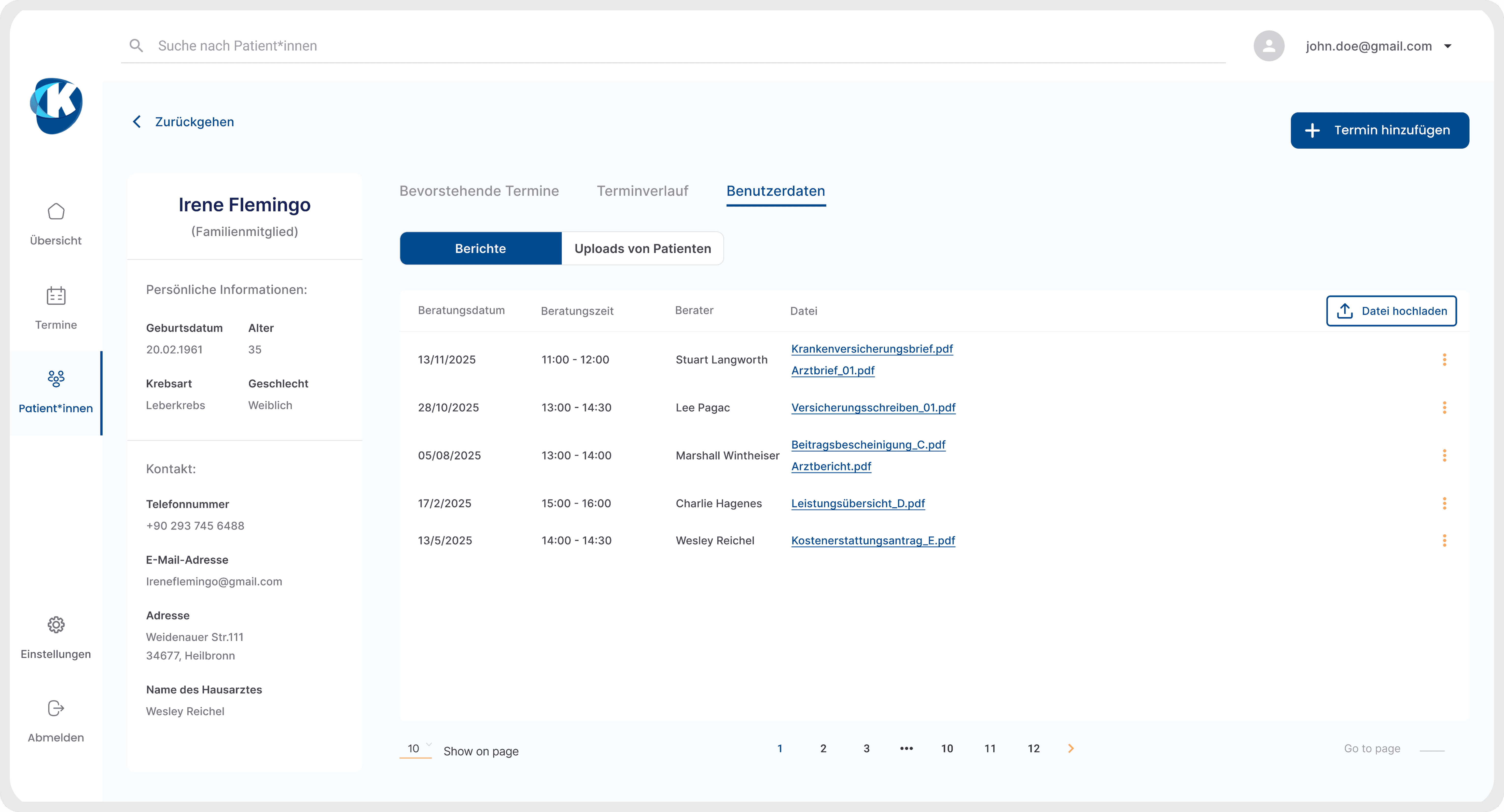
Counselor interviews showed documents were scattered across email, folders and paper. This table collects all files per patient, ordered by session, so counselors can see, open and upload documents without leaving the profile.
Patient Overview
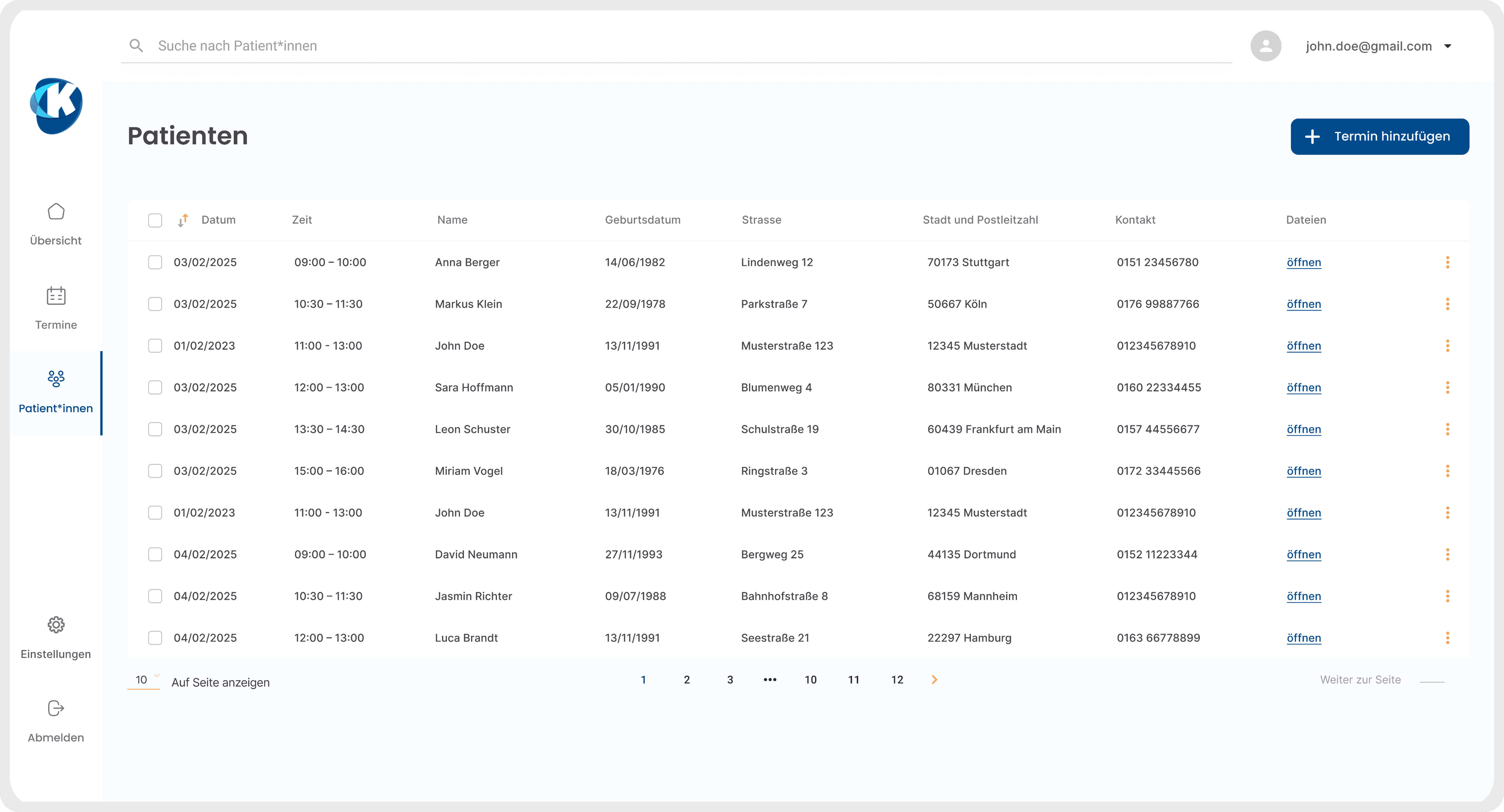
Interviews showed counselors already manage their day in Excel style tables and struggle when patient data is spread across tools. This list keeps all patients, contacts in one sortable view so they can search, open a profile, add appointments or safely remove outdated records in a few clicks.
Homepage
Counselors asked for “one place to see everything.” The homepage delivers that: live schedule, incoming requests, updates, and documents; reducing prep time and eliminating tool-hopping.
Appointment Management
User research revealed counselors needed one trustworthy system for sessions; something their current mix of Outlook and Meona couldn’t provide. This unified calendar gives them one place to view, start, reschedule, or organize appointments without jumping between tools.
Patient Documents Overview
Counselor interviews showed documents were scattered across email, folders and paper. This table collects all files per patient, ordered by session, so counselors can see, open and upload documents without leaving the profile.
Patient Overview
Interviews showed counselors already manage their day in Excel style tables and struggle when patient data is spread across tools. This list keeps all patients, contacts in one sortable view so they can search, open a profile, add appointments or safely remove outdated records in a few clicks.
Homepage
Counselors asked for “one place to see everything.” The homepage delivers that: live schedule, incoming requests, updates, and documents; reducing prep time and eliminating tool-hopping.
Appointment Management
User research revealed counselors needed one trustworthy system for sessions; something their current mix of Outlook and Meona couldn’t provide. This unified calendar gives them one place to view, start, reschedule, or organize appointments without jumping between tools.
Patient Documents Overview
Counselor interviews showed documents were scattered across email, folders and paper. This table collects all files per patient, ordered by session, so counselors can see, open and upload documents without leaving the profile.
Patient Overview
Interviews showed counselors already manage their day in Excel style tables and struggle when patient data is spread across tools. This list keeps all patients, contacts in one sortable view so they can search, open a profile, add appointments or safely remove outdated records in a few clicks.
Homepage
Counselors asked for “one place to see everything.” The homepage delivers that: live schedule, incoming requests, updates, and documents; reducing prep time and eliminating tool-hopping.
Appointment Management
User research revealed counselors needed one trustworthy system for sessions; something their current mix of Outlook and Meona couldn’t provide. This unified calendar gives them one place to view, start, reschedule, or organize appointments without jumping between tools.
Patient Documents Overview
Counselor interviews showed documents were scattered across email, folders and paper. This table collects all files per patient, ordered by session, so counselors can see, open and upload documents without leaving the profile.
Patient Overview
Interviews showed counselors already manage their day in Excel style tables and struggle when patient data is spread across tools. This list keeps all patients, contacts in one sortable view so they can search, open a profile, add appointments or safely remove outdated records in a few clicks.
——————
05. USABILITY TESTING
——————
05. USABILITY TESTING
——————
05. USABILITY TESTING
Mobile App:
First iteration with 7 patients: the problems they hit and the fixes I designed:
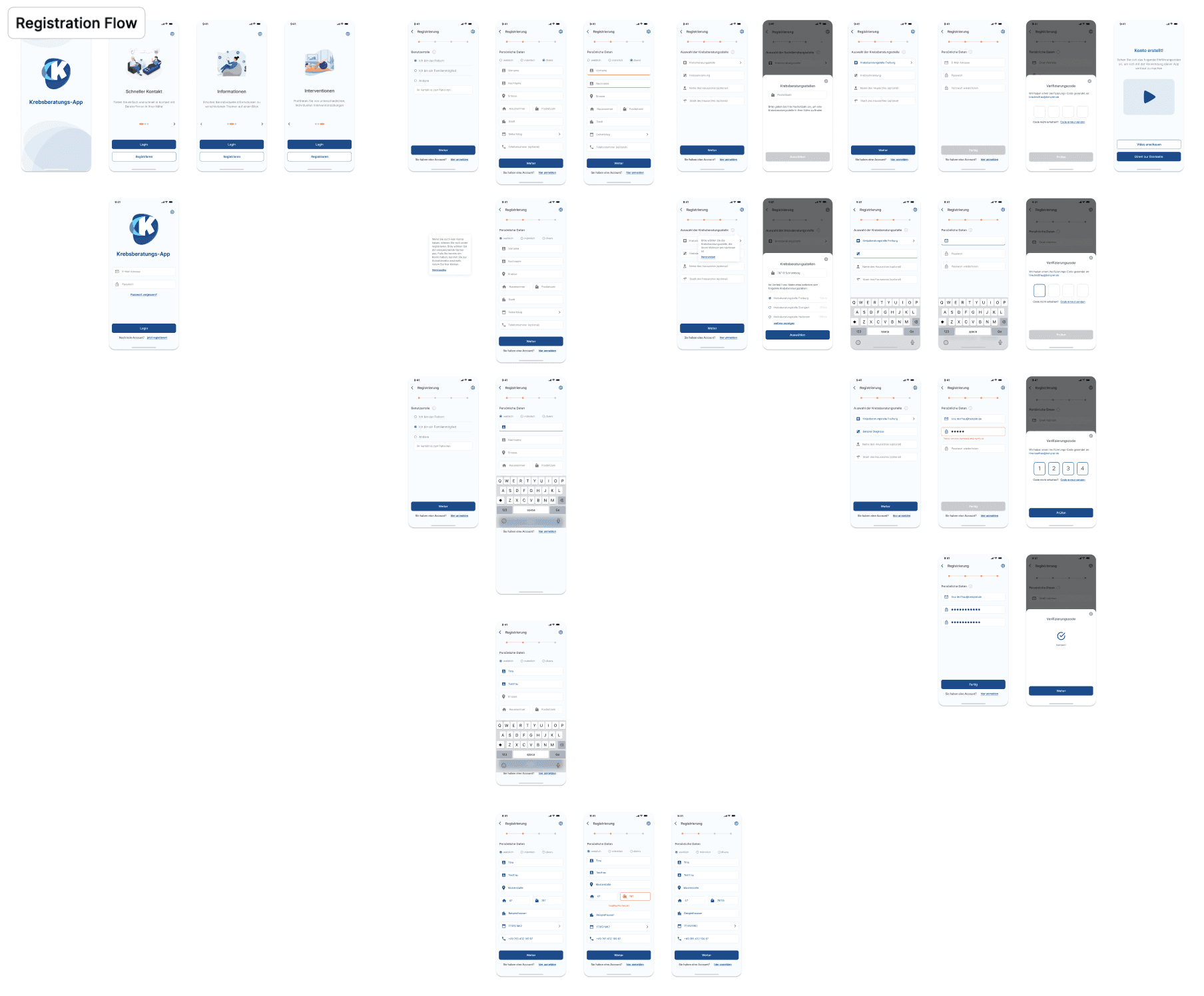
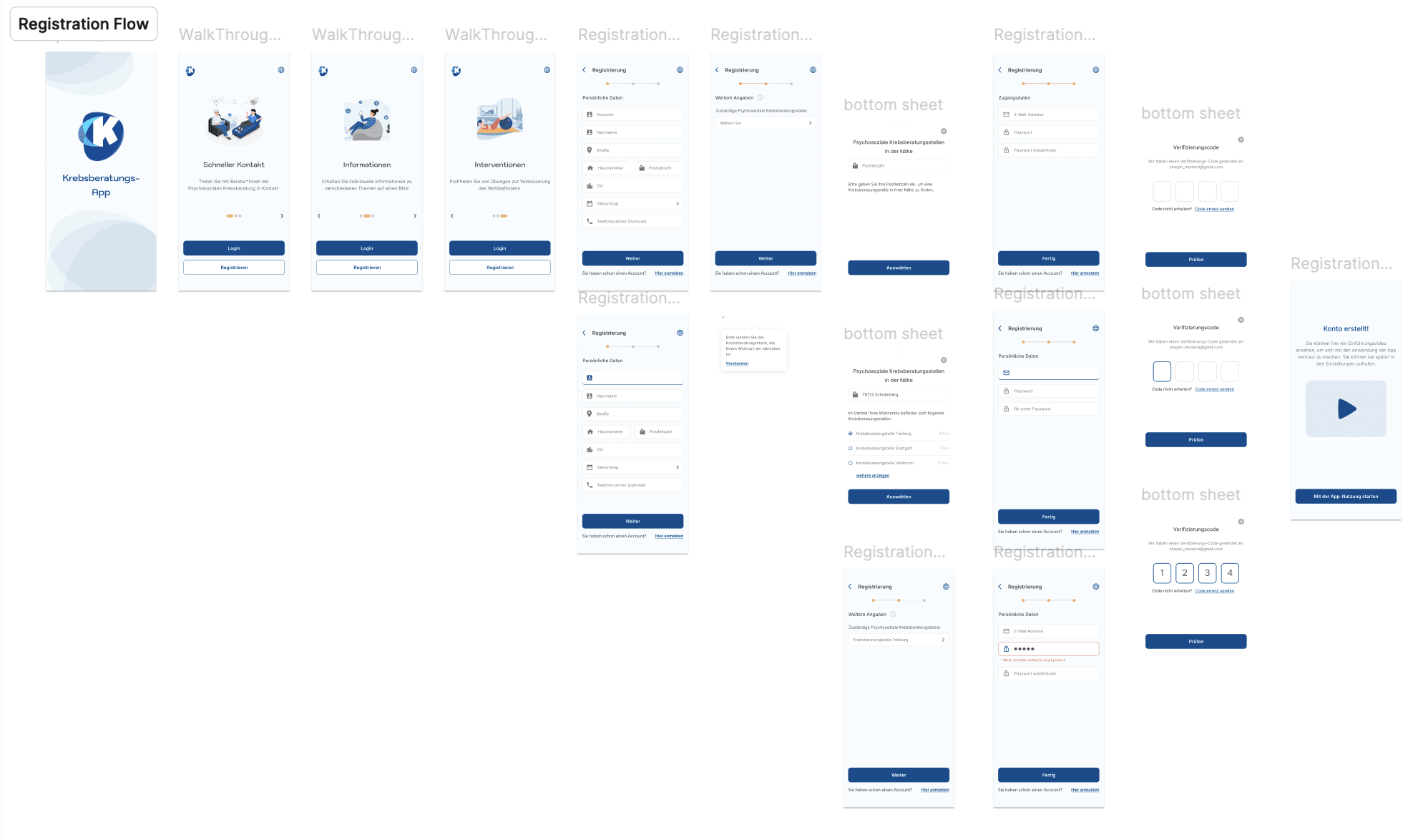
Too many steps for registration → Users got tired before even reaching the app.
What I did: Simplified the registration flow by removing non-essential input fields, after consulting with our counselor colleagues. Result: faster onboarding and less drop-off.
Before
After
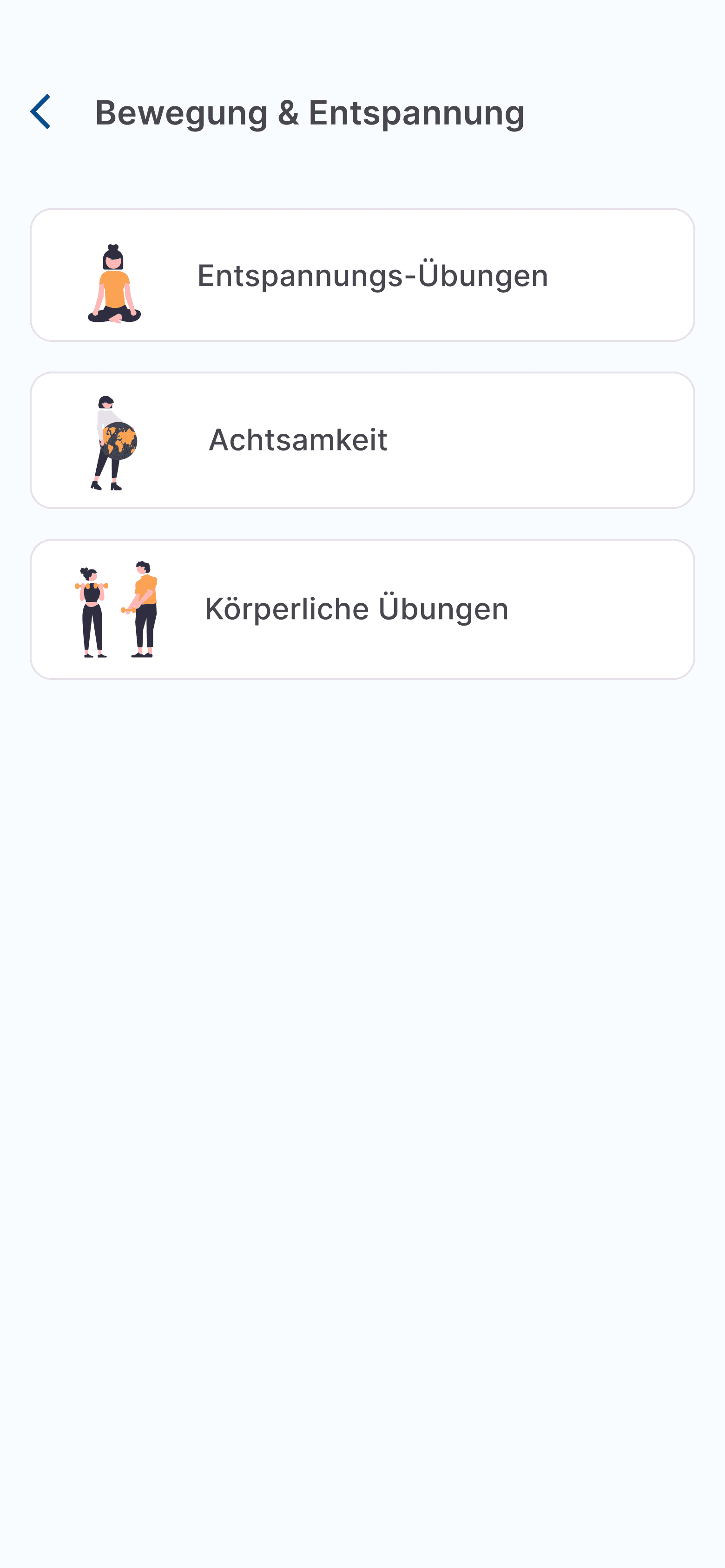
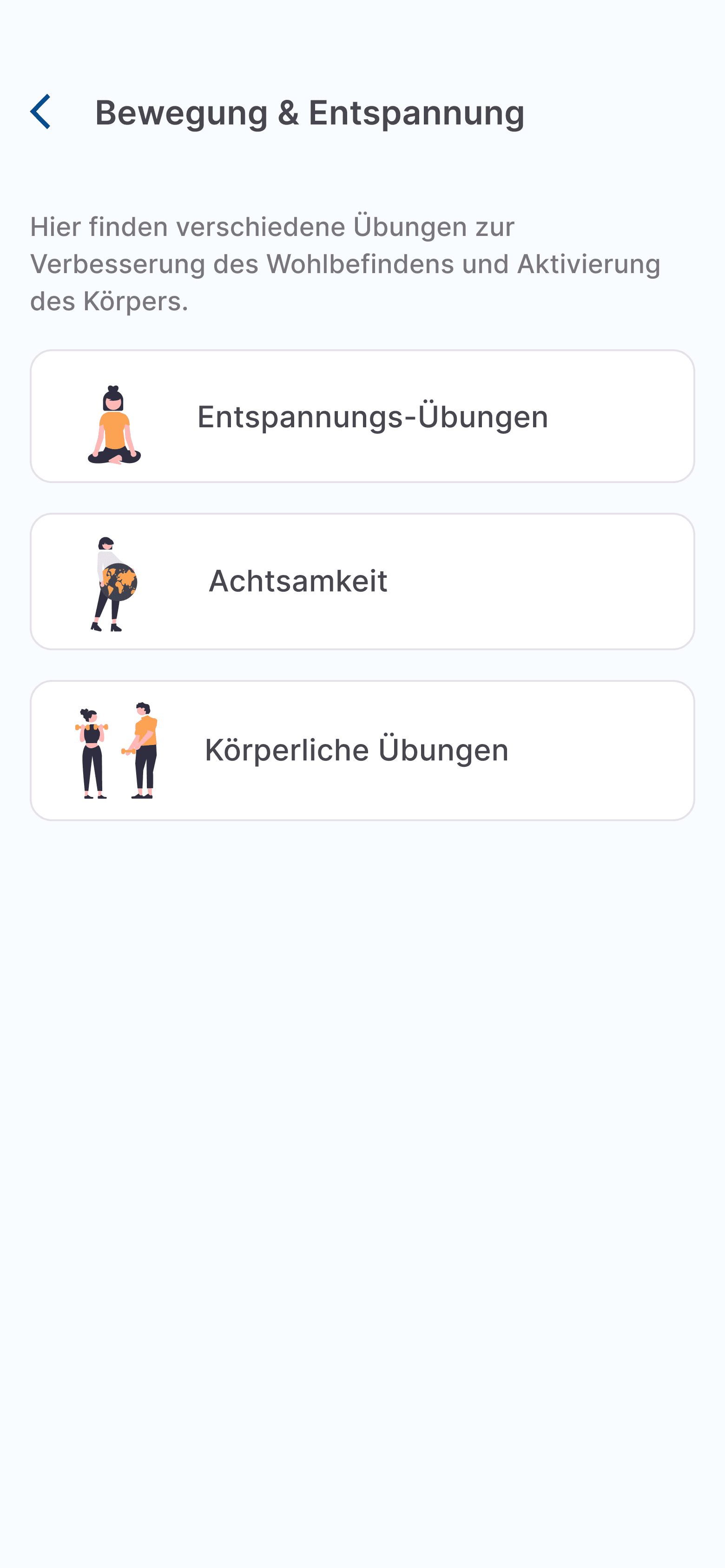
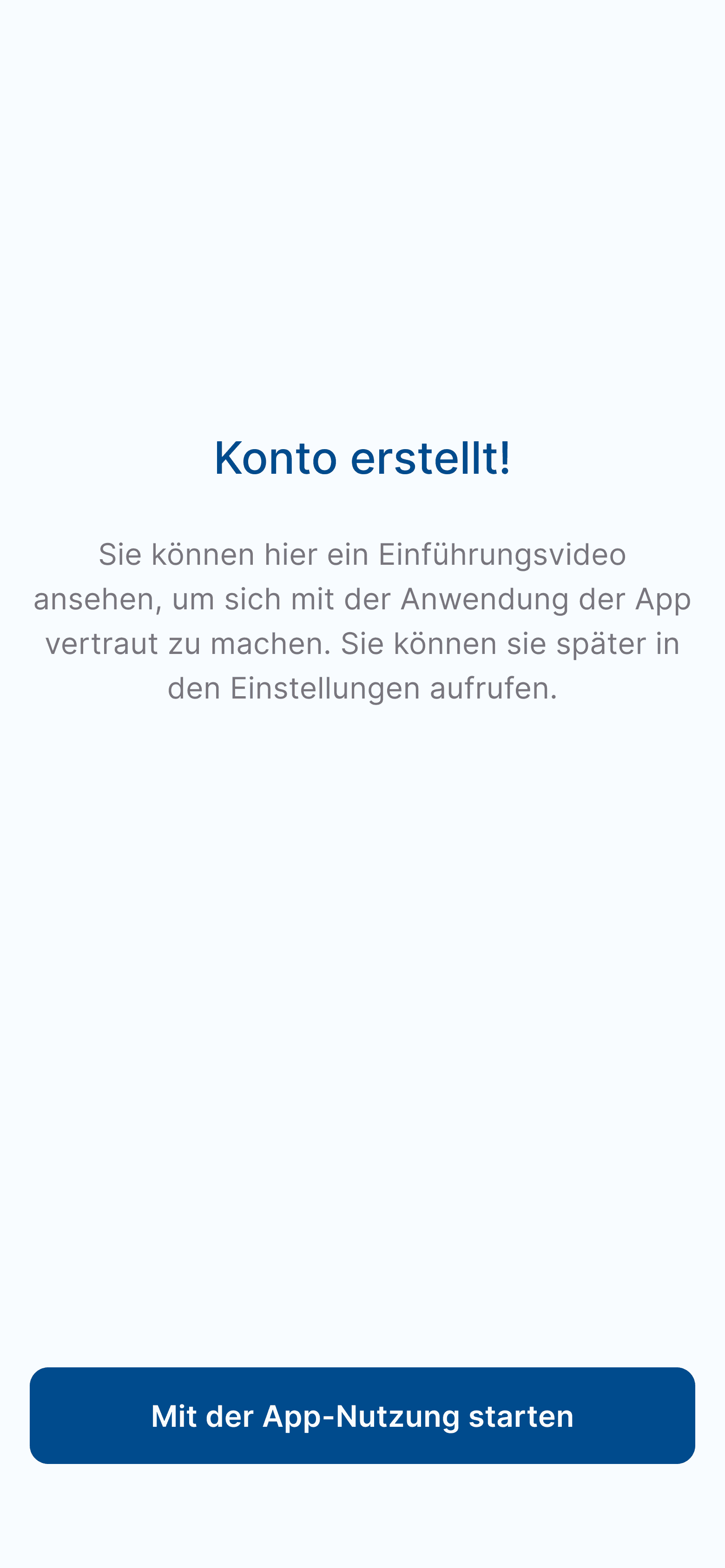
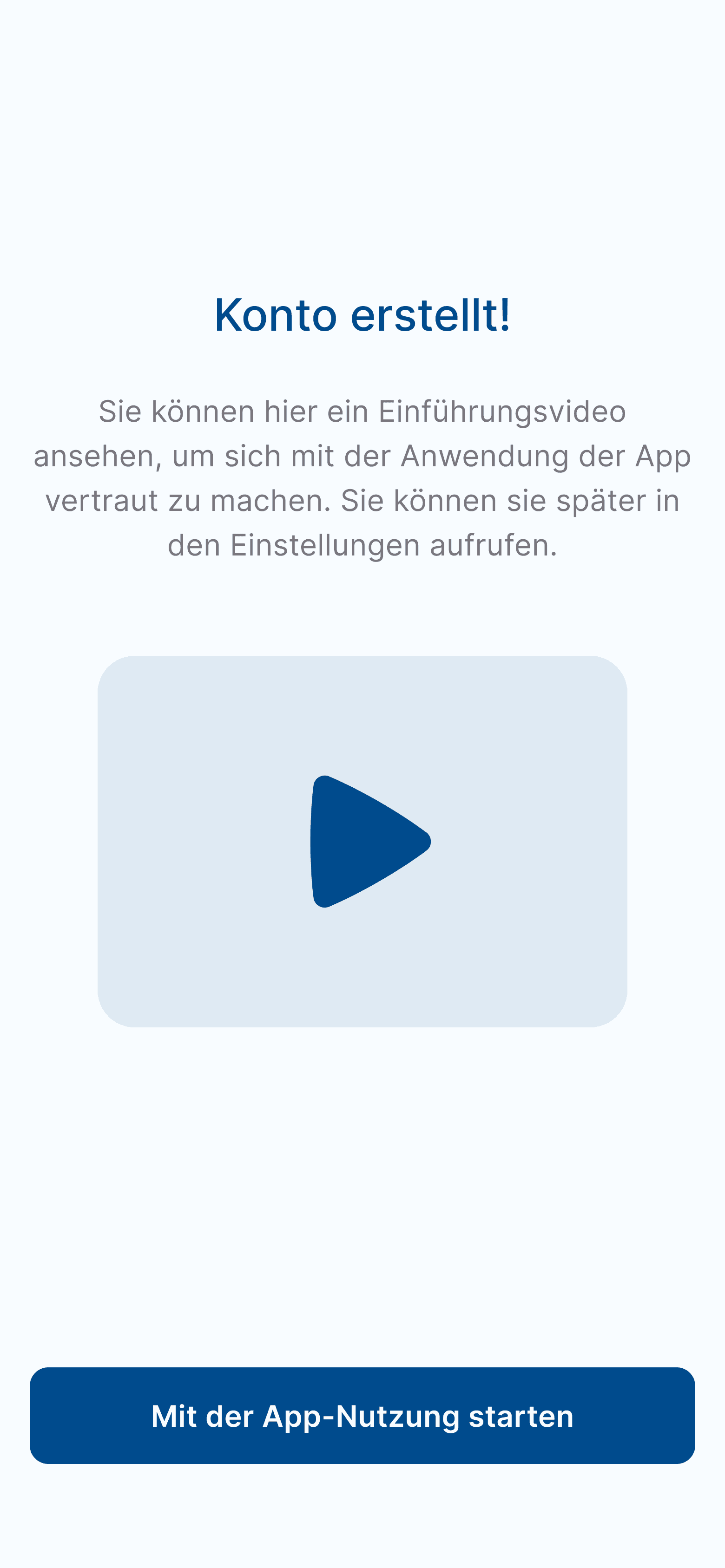
Lack of navigation clarity → Users weren’t sure what to do next after signing up.
What I did: Added clearer labels and introduced a short intro video explaining how to use the app; shown right after registration and always accessible via Settings.
Before
After
Before
After
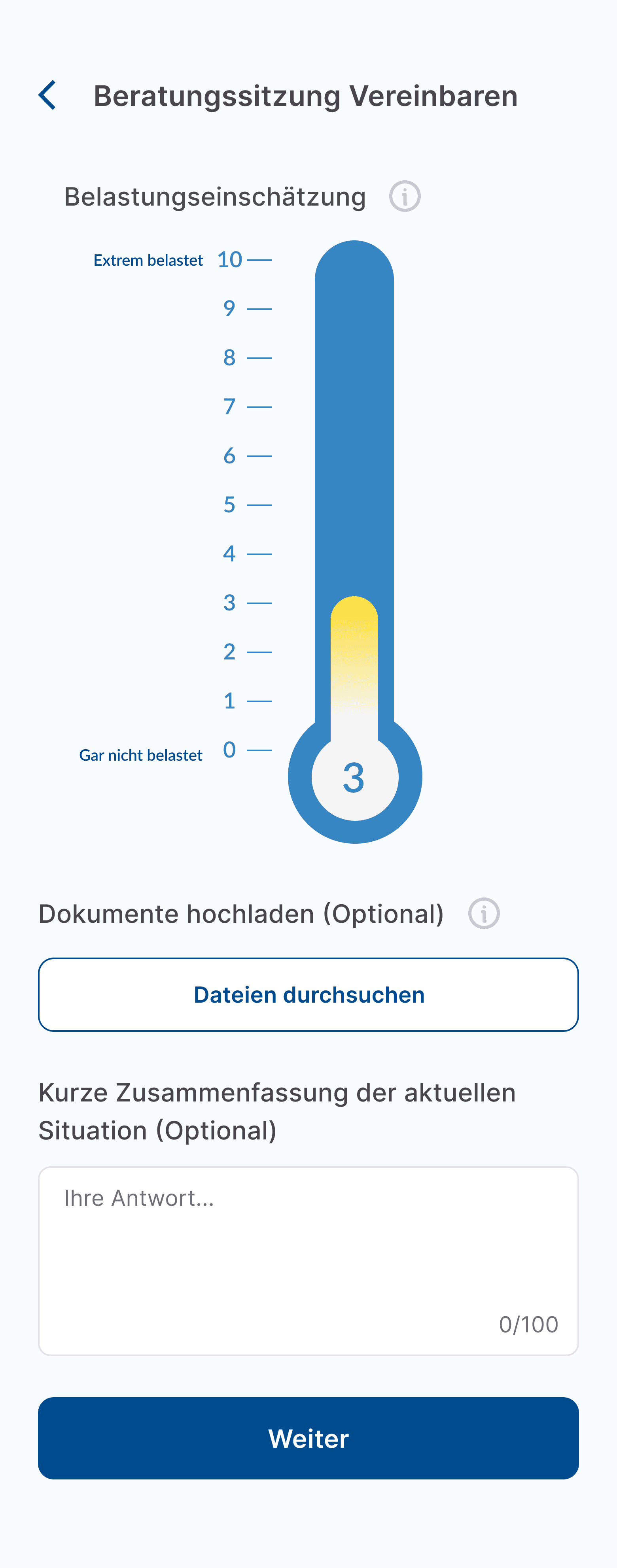
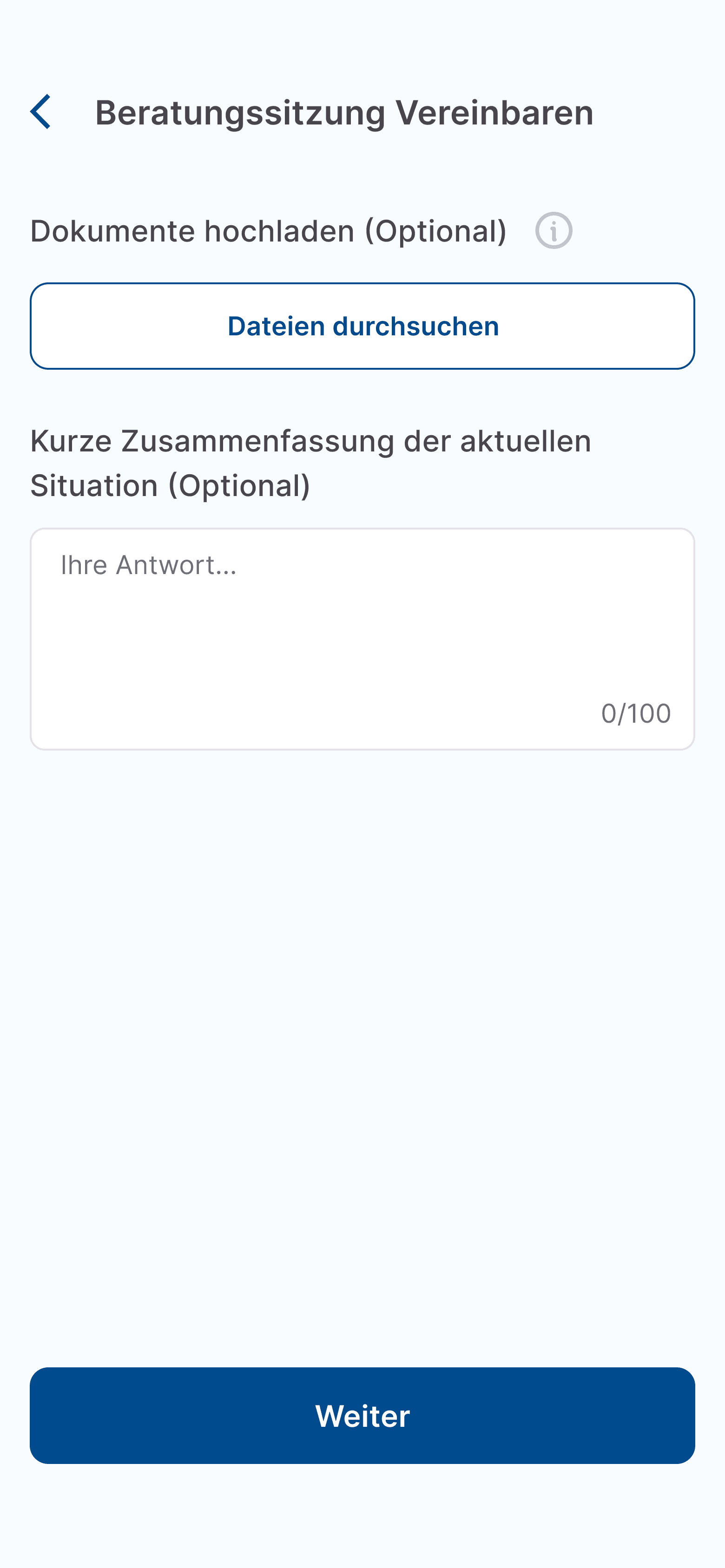
Distress thermometer confusion → Several users didn’t understand what it measured or how to respond.
What I did: Removed it entirely for the MVP, as counselors also confirmed it wasn’t a critical feature for the first version.
Before
After
Confusing tab design → Users often missed key sections or tapped the wrong icons.
What I did: Redesigned the tabs for better visibility and consistency, using more familiar visual cues and active-state feedback.
Before

After

Too many steps for registration → Users got tired before even reaching the app.
What I did: Simplified the registration flow by removing non-essential input fields, after consulting with our counselor colleagues. Result: faster onboarding and less drop-off.
Before
After
Lack of navigation clarity → Users weren’t sure what to do next after signing up.
What I did: Added clearer labels and introduced a short intro video explaining how to use the app; shown right after registration and always accessible via Settings.
Before
After
Before
After
Distress thermometer confusion → Several users didn’t understand what it measured or how to respond.
What I did: Removed it entirely for the MVP, as counselors also confirmed it wasn’t a critical feature for the first version.
Before
After
Confusing tab design → Users often missed key sections or tapped the wrong icons.
What I did: Redesigned the tabs for better visibility and consistency, using more familiar visual cues and active-state feedback.
Before
After
Too many steps for registration → Users got tired before even reaching the app.
What I did: Simplified the registration flow by removing non-essential input fields, after consulting with our counselor colleagues. Result: faster onboarding and less drop-off.
Before
After
Lack of navigation clarity → Users weren’t sure what to do next after signing up.
What I did: Added clearer labels and introduced a short intro video explaining how to use the app; shown right after registration and always accessible via Settings.
Before
After
Before
After
Distress thermometer confusion → Several users didn’t understand what it measured or how to respond.
What I did: Removed it entirely for the MVP, as counselors also confirmed it wasn’t a critical feature for the first version.
Before
After
Confusing tab design → Users often missed key sections or tapped the wrong icons.
What I did: Redesigned the tabs for better visibility and consistency, using more familiar visual cues and active-state feedback.
Before
After
Too many steps for registration → Users got tired before even reaching the app.
What I did: Simplified the registration flow by removing non-essential input fields, after consulting with our counselor colleagues. Result: faster onboarding and less drop-off.
Before
After
Lack of navigation clarity → Users weren’t sure what to do next after signing up.
What I did: Added clearer labels and introduced a short intro video explaining how to use the app; shown right after registration and always accessible via Settings.
Before
After
Before
After
Distress thermometer confusion → Several users didn’t understand what it measured or how to respond.
What I did: Removed it entirely for the MVP, as counselors also confirmed it wasn’t a critical feature for the first version.
Before
After
Confusing tab design → Users often missed key sections or tapped the wrong icons.
What I did: Redesigned the tabs for better visibility and consistency, using more familiar visual cues and active-state feedback.
Before
After
Second iteration with 8 patients revealed just one remaining problem:
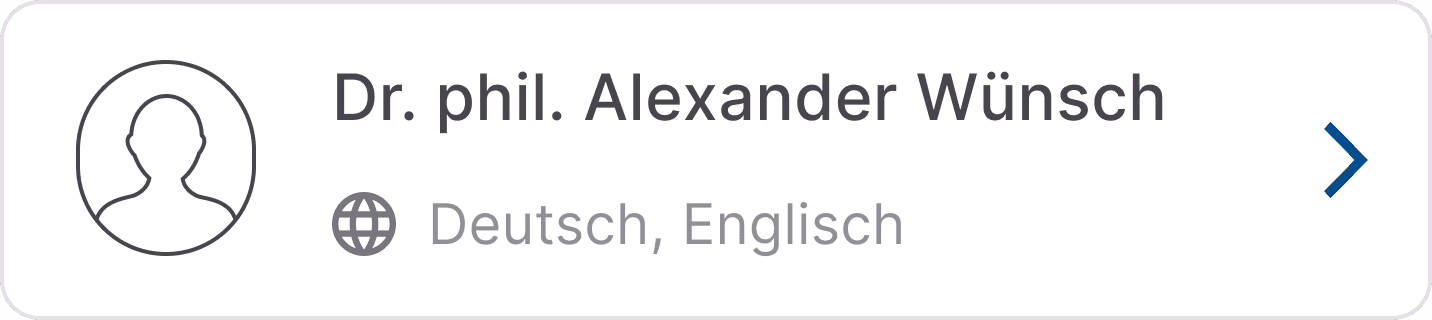
Fully booked counselor frustration → Patients had to backtrack and restart their booking whenever a counselor’s calendar was full.
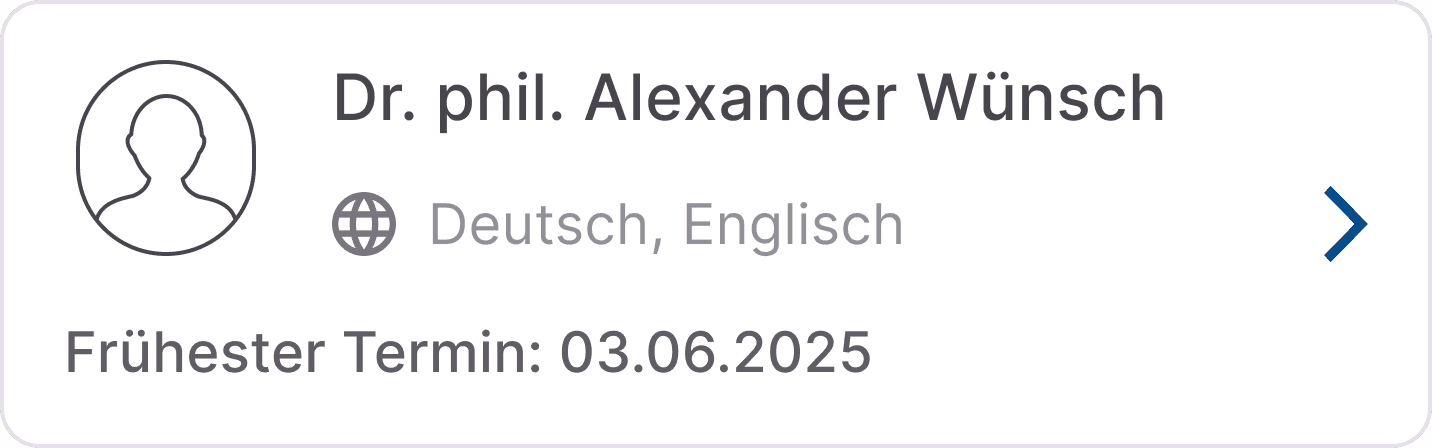
What I did: Added an “Earliest Available Slot” indicator directly on the counselor card so patients could instantly see earliest availability and decide whether to book or move on. Small change, big affect.
The next workshop confirmed we were moving in the right direction as users said: “Now it feels more personal.” or “I can finally see who I’ll be talking to.” But one pain point remained:
Fully booked counselor frustration → Patients had to backtrack and restart their search whenever a counselor’s calendar was full. It felt like a “Why am I doing this twice?” moment for everyone.
What I did: Added an “Earliest Available Slot” indicator directly on the counselor card so patients could instantly see availability and decide whether to book or move on. Small change, big sigh of relief.
The next workshop confirmed we were moving in the right direction as users said: “Now it feels more personal.” or “I can finally see who I’ll be talking to.” But one pain point remained:
Fully booked counselor frustration → Patients had to backtrack and restart their search whenever a counselor’s calendar was full. It felt like a “Why am I doing this twice?” moment for everyone.
What I did: Added an “Earliest Available Slot” indicator directly on the counselor card so patients could instantly see availability and decide whether to book or move on. Small change, big sigh of relief.
Fully booked counselor frustration → Patients had to backtrack and restart their booking whenever a counselor’s calendar was full.
What I did: Added an “Earliest Available Slot” indicator directly on the counselor card so patients could instantly see earliest availability and decide whether to book or move on. Small change, big affect.
Before
After
Desktop App:
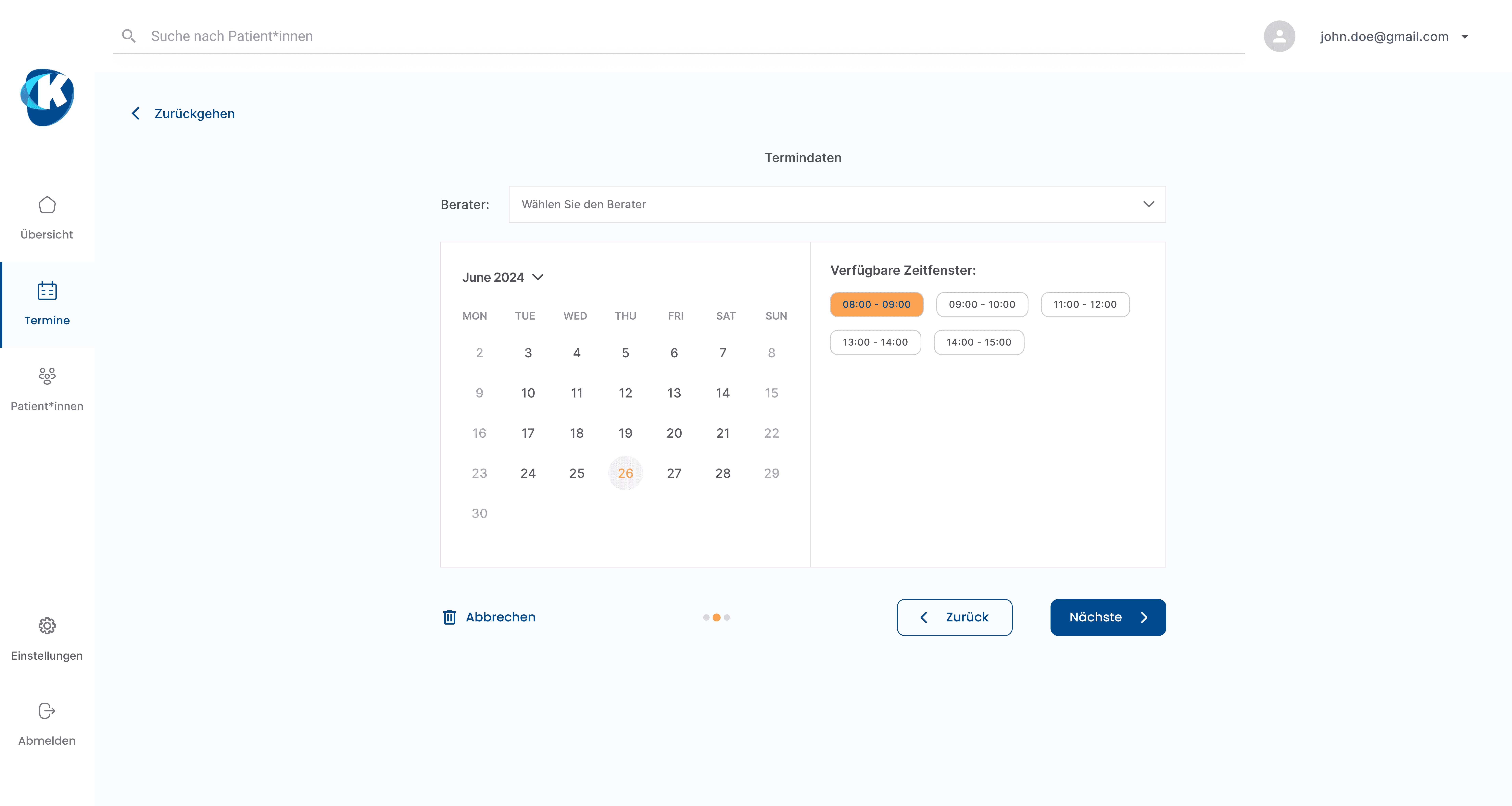
In the usability test of the desktop app with 6 counselors, the only suggestion arised was to have “Outlook style“ booking.
In the usability test of the desktop app with 6 counselors, the only suggestion arised was to have “Outlook style“ booking.
Before
After
Before
After
Before
After
Before
After
But in the middle of testing, two other tools were approved and took over our original use case. 🚨
But in the middle of testing, two other tools were approved and took over our original use case. 🚨
Until then, counselors had to use Meona for GDPR safe calls and scattered tools for documentation. During our tests, Webex was suddenly approved for video and Freinet was deployed for document management, so the core counselor problems were now covered. So the challenge shifted from building a replacement to designing around the new setup.
Until then, counselors had to use Meona for GDPR safe calls and scattered tools for documentation. During our tests, Webex was suddenly approved for video and Freinet was deployed for document management, so the core counselor problems were now covered. So the challenge shifted from building a replacement to designing around the new setup.
To understand whether the problem was local or systemic, we ran student-led research in other centers.
To understand whether the problem was local or systemic, we ran student-led research in other centers.
We were legally limited to Freiburg, where many counselors were colleagues or friends of our team, so we asked a colleague’s students to interview centers in Bern, Karlsruhe, Ottersheim, and beyond. They all told a similar story:
Counselors everywhere juggled multiple systems.
Double documentation was the norm.
Many wanted AI-assisted tools: voice-to-text, live translation.
But no one wanted yet another standalone platform.
We were legally limited to Freiburg, where many counselors were colleagues or friends of our team, so we asked a colleague’s students to interview centers in Bern, Karlsruhe, Ottersheim, and beyond. They all told a similar story:
Counselors everywhere juggled multiple systems.
Double documentation was the norm.
Many wanted AI-assisted tools: voice-to-text, live translation.
But no one wanted yet another standalone platform.
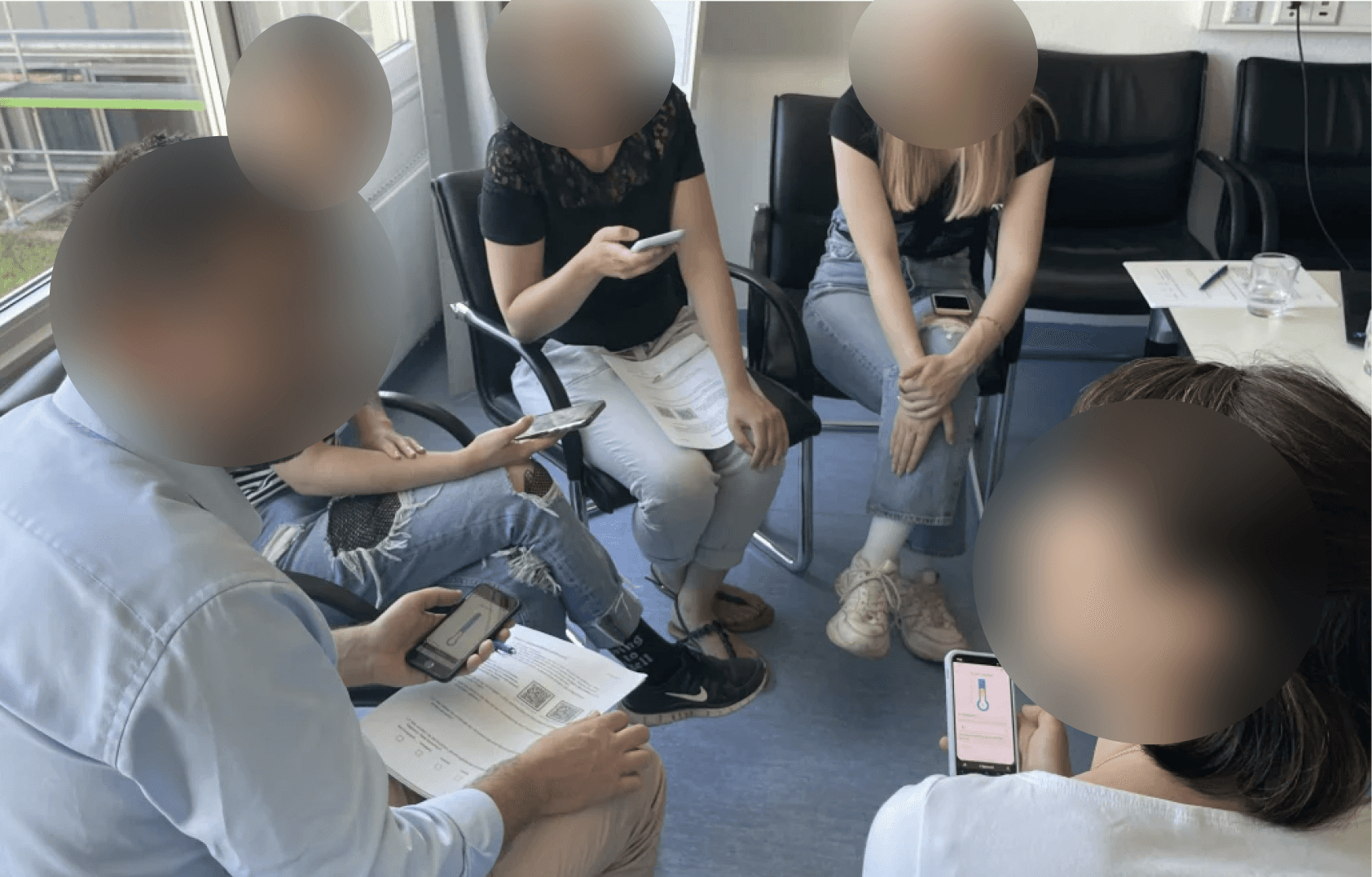
And now I present to you: the “now what?” focus group:
And now I present to you: the “now what?” focus group:
In the last focus group, we brought patients, relatives and counselors together to ask a simple question: now that the reality has changed, what should this project become?
In the last focus group, we brought patients, relatives and counselors together to ask a simple question: now that the reality has changed, what should this project become?
🌟 THE OUTCOME 🌟
Keep the patient app that people liked, stop trying to replace Freinet and Webex, and instead integrate with them while adding what they still cannot do, like AI powered live translation, voice to text documentation, and emotion aware voice support for counselors.
🚀 What comes next (after the funding pause):
🚀 What comes next (after the funding pause):
🚀 What comes next (after the funding pause):
This workshop wrapped our funding round and put us in pause mode. With the next funding, we plan to add AI translation and transcription, deeper integration with tools like Frienet, better accessibility and languages, and keep co-creating with real users.
What I learned:
What I learned:
What I learned:
Bias Will Sabotage Your Research If You Don’t Actively Fight It
Because scope of the project proposal, we were only allowed to interview counselors inside the Freiburg center, many of whom were colleagues or friends of our teammates. That environment naturally creates polite answers, softened criticism and social bias. To reduce bias as much as possible, I used a few guardrails: I asked about specific past behavior, not opinions (“Tell me about the last time…”) and used neutral, non-leading questions with the same interview script for everyone. I also triangulated what I heard with existing research and product data, and looked for contradictions between interviews instead of treating early feedback as truth.
The outcome: even within a biased sample, disciplined methods produced reliable, decision-ready insight.
Balance All Voices But Choose Your Truth
In a project with patients, relatives, and counselors, everyone had a different definition of “simple.” At first, I tried to please everyone. That only made everything confusing.
Eventually, I learned that good UX isn’t about agreeing with every voice, it’s about finding the common field and designing for that. Prioritizing didn’t mean ignoring anyone; it meant respecting time, focus, and sanity.
Test, Learn, Repeat (And Then Unlearn)
Our tests didn’t just validate ideas; they killed some of our favorites. When counselors said, “We don’t want chat or mood diaries,” we had to let those features go, even though patients loved them.
That was hard. But that’s what testing is for, not validation, but evolution. Every usability round made the product simpler, more real, and more humane.
Pivoting Isn’t Failing, It’s Listening at Scale
Twelve months in, I had to advocate for changing our entire strategy. That was terrifying. But I learned that adaptability is a core design skill. The market shifted, tools evolved, and user needs changed. Fighting reality to protect our original plan would have been ego, not design.
And Last But Not Least, Dig Beneath the Feature Request to Find the Real Need.
"I want a diary" often means "I want to feel less alone."
Bias Will Sabotage Your Research If You Don’t Actively Fight It
Because scope of the project proposal, we were only allowed to interview counselors inside the Freiburg center, many of whom were colleagues or friends of our teammates. That environment naturally creates polite answers, softened criticism and social bias. To reduce bias as much as possible, I used a few guardrails: I asked about specific past behavior, not opinions (“Tell me about the last time…”) and used neutral, non-leading questions with the same interview script for everyone. I also triangulated what I heard with existing research and product data, and looked for contradictions between interviews instead of treating early feedback as truth.
The outcome: even within a biased sample, disciplined methods produced reliable, decision-ready insight.
Balance All Voices But Choose Your Truth
In a project with patients, relatives, and counselors, everyone had a different definition of “simple.” At first, I tried to please everyone. That only made everything confusing.
Eventually, I learned that good UX isn’t about agreeing with every voice, it’s about finding the common field and designing for that. Prioritizing didn’t mean ignoring anyone; it meant respecting time, focus, and sanity.
Test, Learn, Repeat (And Then Unlearn)
Our tests didn’t just validate ideas; they killed some of our favorites. When counselors said, “We don’t want chat or mood diaries,” we had to let those features go, even though patients loved them.
That was hard. But that’s what testing is for, not validation, but evolution. Every usability round made the product simpler, more real, and more humane.
Pivoting Isn’t Failing, It’s Listening at Scale
Twelve months in, I had to advocate for changing our entire strategy. That was terrifying. But I learned that adaptability is a core design skill. The market shifted, tools evolved, and user needs changed. Fighting reality to protect our original plan would have been ego, not design.
And Last But Not Least, Dig Beneath the Feature Request to Find the Real Need.
"I want a diary" often means "I want to feel less alone."
Bias Will Sabotage Your Research If You Don’t Actively Fight It
Because scope of the project proposal, we were only allowed to interview counselors inside the Freiburg center, many of whom were colleagues or friends of our teammates. That environment naturally creates polite answers, softened criticism and social bias. To reduce bias as much as possible, I used a few guardrails: I asked about specific past behavior, not opinions (“Tell me about the last time…”) and used neutral, non-leading questions with the same interview script for everyone. I also triangulated what I heard with existing research and product data, and looked for contradictions between interviews instead of treating early feedback as truth.
The outcome: even within a biased sample, disciplined methods produced reliable, decision-ready insight.
Balance All Voices But Choose Your Truth
In a project with patients, relatives, and counselors, everyone had a different definition of “simple.” At first, I tried to please everyone. That only made everything confusing.
Eventually, I learned that good UX isn’t about agreeing with every voice, it’s about finding the common field and designing for that. Prioritizing didn’t mean ignoring anyone; it meant respecting time, focus, and sanity.
Test, Learn, Repeat (And Then Unlearn)
Our tests didn’t just validate ideas; they killed some of our favorites. When counselors said, “We don’t want chat or mood diaries,” we had to let those features go, even though patients loved them.
That was hard. But that’s what testing is for, not validation, but evolution. Every usability round made the product simpler, more real, and more humane.
Pivoting Isn’t Failing, It’s Listening at Scale
Twelve months in, I had to advocate for changing our entire strategy. That was terrifying. But I learned that adaptability is a core design skill. The market shifted, tools evolved, and user needs changed. Fighting reality to protect our original plan would have been ego, not design.
And Last But Not Least, Dig Beneath the Feature Request to Find the Real Need.
"I want a diary" often means "I want to feel less alone."
Bias Will Sabotage Your Research If You Don’t Actively Fight It
Because scope of the project proposal, we were only allowed to interview counselors inside the Freiburg center, many of whom were colleagues or friends of our teammates. That environment naturally creates polite answers, softened criticism and social bias. To reduce bias as much as possible, I used a few guardrails: I asked about specific past behavior, not opinions (“Tell me about the last time…”) and used neutral, non-leading questions with the same interview script for everyone. I also triangulated what I heard with existing research and product data, and looked for contradictions between interviews instead of treating early feedback as truth.
The outcome: even within a biased sample, disciplined methods produced reliable, decision-ready insight.
Balance All Voices But Choose Your Truth
In a project with patients, relatives, and counselors, everyone had a different definition of “simple.” At first, I tried to please everyone. That only made everything confusing.
Eventually, I learned that good UX isn’t about agreeing with every voice, it’s about finding the common field and designing for that. Prioritizing didn’t mean ignoring anyone; it meant respecting time, focus, and sanity.
Test, Learn, Repeat (And Then Unlearn)
Our tests didn’t just validate ideas; they killed some of our favorites. When counselors said, “We don’t want chat or mood diaries,” we had to let those features go, even though patients loved them.
That was hard. But that’s what testing is for, not validation, but evolution. Every usability round made the product simpler, more real, and more humane.
Pivoting Isn’t Failing, It’s Listening at Scale
Twelve months in, I had to advocate for changing our entire strategy. That was terrifying. But I learned that adaptability is a core design skill. The market shifted, tools evolved, and user needs changed. Fighting reality to protect our original plan would have been ego, not design.
And Last But Not Least, Dig Beneath the Feature Request to Find the Real Need.
"I want a diary" often means "I want to feel less alone."