Catalyst App
Catalyst App
Swipe on ideas, not faces
Swipe on ideas, not faces
At-A-Glance
At-A-Glance
A social platform that helps people connect through ideas and projects, not profiles. Designed to spark unexpected collaborations between creators, researchers, and dreamers from different disciplines.
A social platform that helps people connect through ideas and projects, not profiles. Designed to spark unexpected collaborations between creators, researchers, and dreamers from different disciplines.
MY ROLE
MY ROLE
UI/UX Designer (end-to-end)
UI/UX Designer (end-to-end)
TEAM
TEAM
4 PhD researchers + 1 dev
4 PhD researchers + 1 dev
Timeline
Timeline
4 weeks
4 weeks
THE PROBLEM?
THE PROBLEM?
Five PhD students believed that names and titles biased collaboration, so they wanted to try a different approach: anonymize identities, borrow the swipe from Tinder to make discovery fun and seamless. So they asked me to design a high fidelity app around it in 4 weeks as a “minijobber”.
Five PhD students believed that names and titles biased collaboration, so they wanted to try a different approach: anonymize identities, borrow the swipe from Tinder to make discovery fun and seamless. So they asked me to design a high fidelity app around it in 4 weeks as a “minijobber”.
——
EMPATHIZE
——
EMPATHIZE
REFLECTION
Catalyst was a masterclass in balancing time pressure, collaboration, and research. I learned that guerrilla research can yield credible insights even when time is short, data diplomacy helps align strong personalities without slowing progress, and playful interaction can make serious subjects more approachable.
"Assumptions are good starting points, but real change demands validation through research" 🤓
"Assumptions are good starting points, but real change demands validation through research" 🤓
However, with no time for formal research, I did a two week guerrilla sprint : a quick survey (n = 60) and coffee fueled hallway interviews with anyone I could catch (n = 18).
However, with no time for formal research, I did a two week guerrilla sprint : a quick survey (n = 60) and coffee fueled hallway interviews with anyone I could catch (n = 18).
However, with no time for formal research, I did a two week guerrilla sprint : a quick survey (n = 60) and coffee fueled hallway interviews with anyone I could catch (n = 18).
Then I started analyzing the findings and, surprise: people liked anonymous ideas and the swipe, but many called it “fair yet too empty” and wanted at least one trust cue to feel comfortable.
Then I analyzed everything… and surprise:
People enjoyed anonymous ideas and the swipe interaction, but about half the participants felt it was “fair, but too empty,” and several said they needed “at least one trust cue” to feel comfortable engaging.
Then I started analyzing the findings and, surprise: people liked anonymous ideas and the swipe, but many called it “fair yet too empty” and wanted at least one trust cue to feel comfortable.
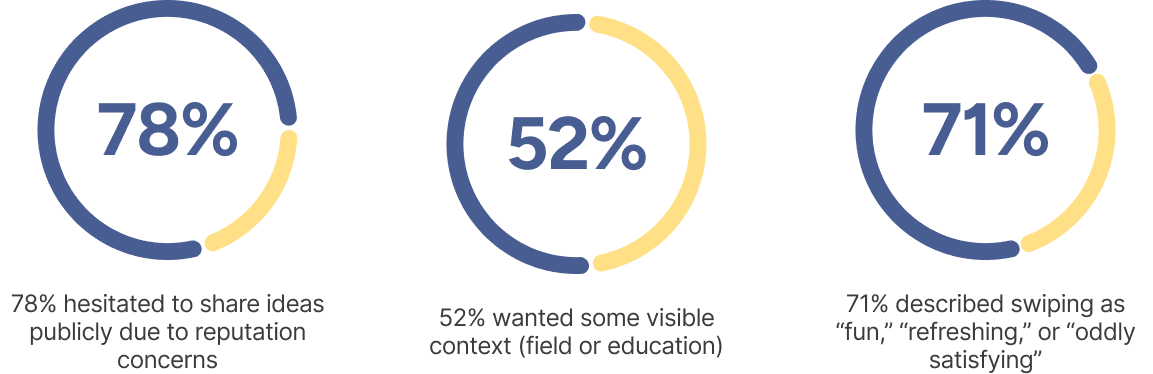
P.S. A quick snapshot of the highlights of the research findings:
P.S. A quick snapshot of the highlights of the research findings:
💡So in UX terms, the PhD team’s direction created a credibility gap. So while their hypothesis solved bias, it unintentionally weakened trust💡
Then I analyzed everything… and surprise:
People enjoyed anonymous ideas and the swipe interaction, but about half the participants felt it was “fair, but too empty,” and several said they needed “at least one trust cue” to feel comfortable engaging.
——
IDEATE
——
IDEATE
This is where my job shifted from just designing screens to balancing research evidence with a very opinionated PhD team.
This is where my job shifted from just designing screens to balancing research evidence with a very opinionated PhD team.
When I shared the findings, I expected a quick pivot. Instead, the PhD team doubled down: “Any visible background detail reintroduces bias. That is exactly what we are trying to avoid.” And since the clock was ticking:
I shared these findings in our next sync, expecting a quick pivot, instead, the PhD team doubled down:
“Any visible background detail reintroduces bias. That’s the opposite of what we’re proving.”
Their argument was philosophically sound but practically risky. We now had two competing truths:
When I shared the findings, I expected a quick pivot. Instead, the PhD team doubled down: “Any visible background detail reintroduces bias. That is exactly what we are trying to avoid.” And since the clock was ticking:
And what I did?
And what I did?
I turned the conflict into a plan: ship anonymity first, watch the real behavior, and then decide how much context to add later.
I shared these findings in our next sync, expecting a quick pivot, instead, the PhD team doubled down:
“Any visible background detail reintroduces bias. That’s the opposite of what we’re proving.”
Their argument was philosophically sound but practically risky. We now had two competing truths:
I turned the conflict into a plan: ship anonymity first, watch the real behavior, and then decide how much context to add later.
The team was on board immediately, and we kept the build moving and avoided getting stuck in theory
I shared these findings in our next sync, expecting a quick pivot, instead, the PhD team doubled down:
“Any visible background detail reintroduces bias. That’s the opposite of what we’re proving.”
Their argument was philosophically sound but practically risky. We now had two competing truths:
The team was on board immediately, and we kept the build moving and avoided getting stuck in theory
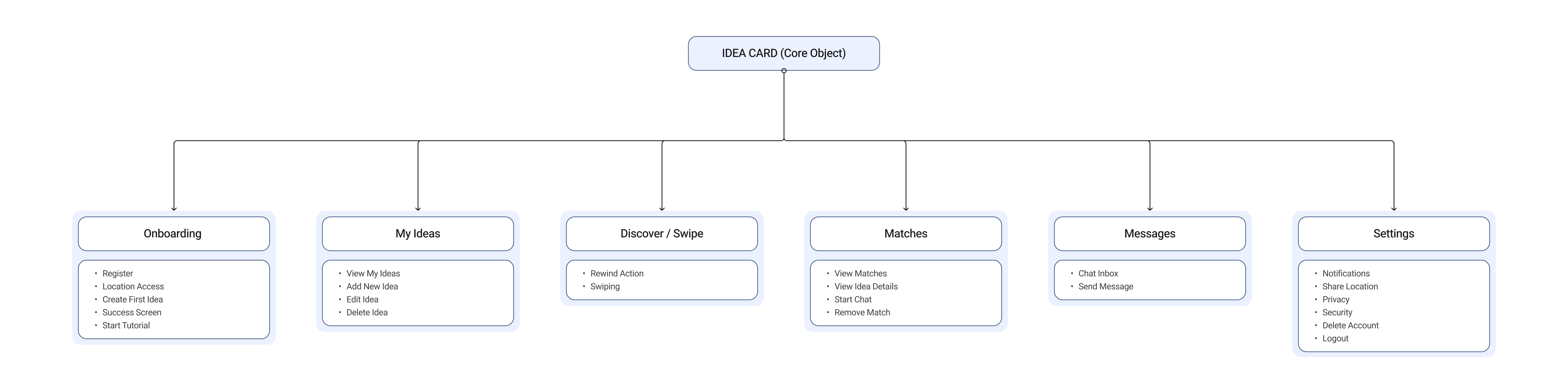
Once the team agreed on the plan, I locked the requirements into a clear IA , our shared contract for what we were building. It clarified scope and gave me the green light to jump into high-fidelity design.
Once the team agreed on the plan, I locked the requirements into a clear IA , our shared contract for what we were building. It clarified scope and gave me the green light to jump into high-fidelity design.
——
PROTOTYPE AND TESTING
——
PROTOTYPE AND TESTING
Now for the fun part, the actual screens👇
Now for the fun part, the actual screens👇
Visual Language
Visual Language
Visual Language
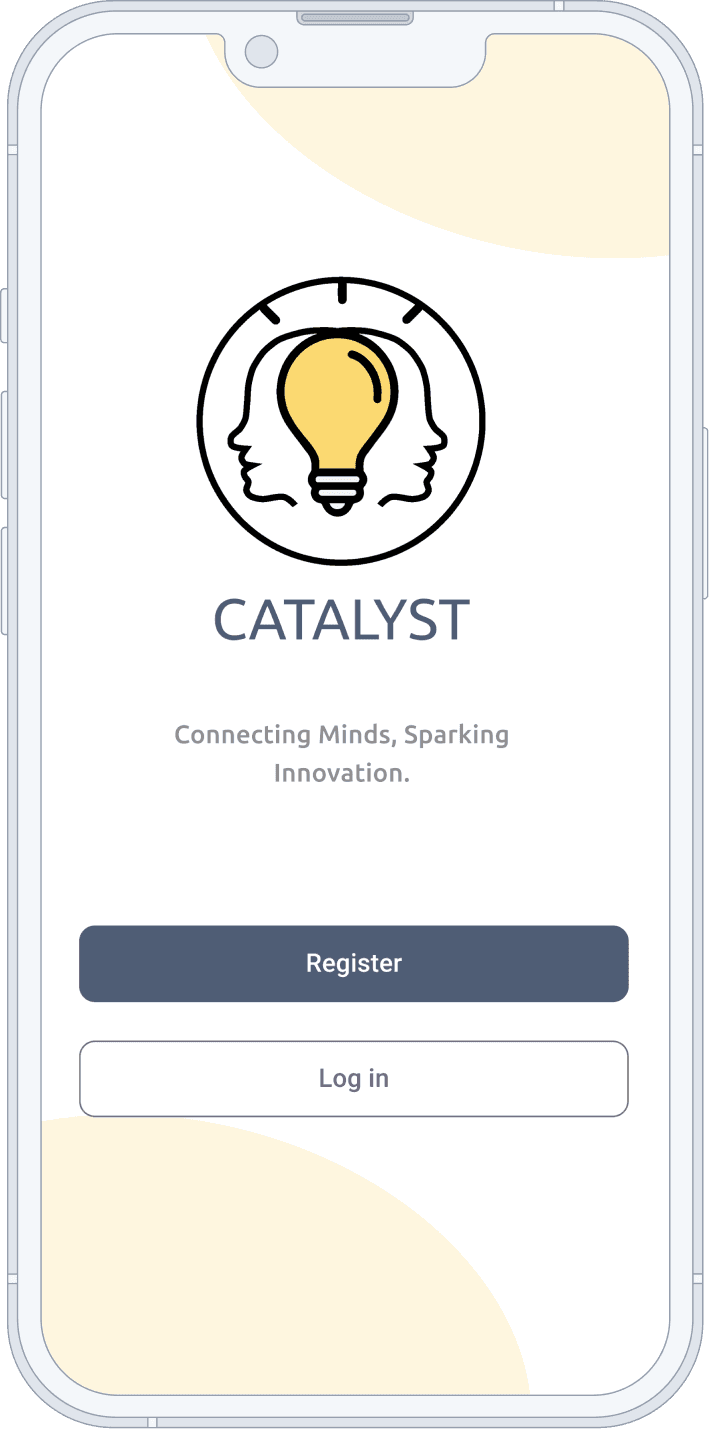
Neutral palette inspired by Material Design; soft ivory, muted navy, gentle gray, and warm yellow.
Neutral palette inspired by Material Design; soft ivory, muted navy, gentle gray, and warm yellow.
Neutral palette inspired by Material Design; soft ivory, muted navy, gentle gray, and warm yellow.
Anonymous Idea Cards
Anonymous Idea Cards
Anonymous Idea Cards
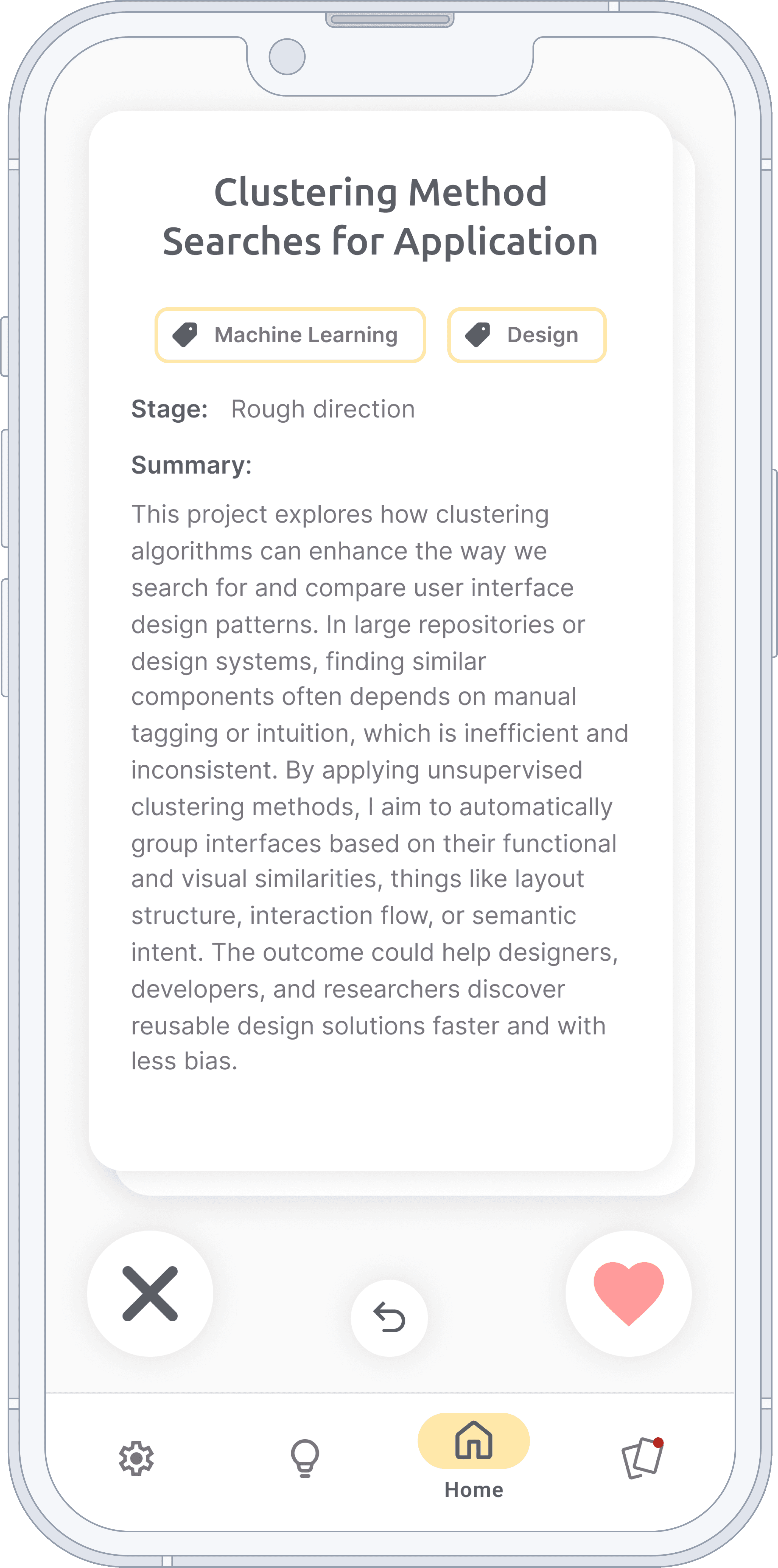
Each card included a title, short summary, tags, and stage. Reinforced fairness and focus on content.
Each card included a title, short summary, tags, and stage. Reinforced fairness and focus on content.
Each card included a title, short summary, tags, and stage. Reinforced fairness and focus on content.
Each card included a title, short summary, tags, and stage. Reinforced fairness and focus on content.
Matches Overview
Matches Overview
Matches Overview
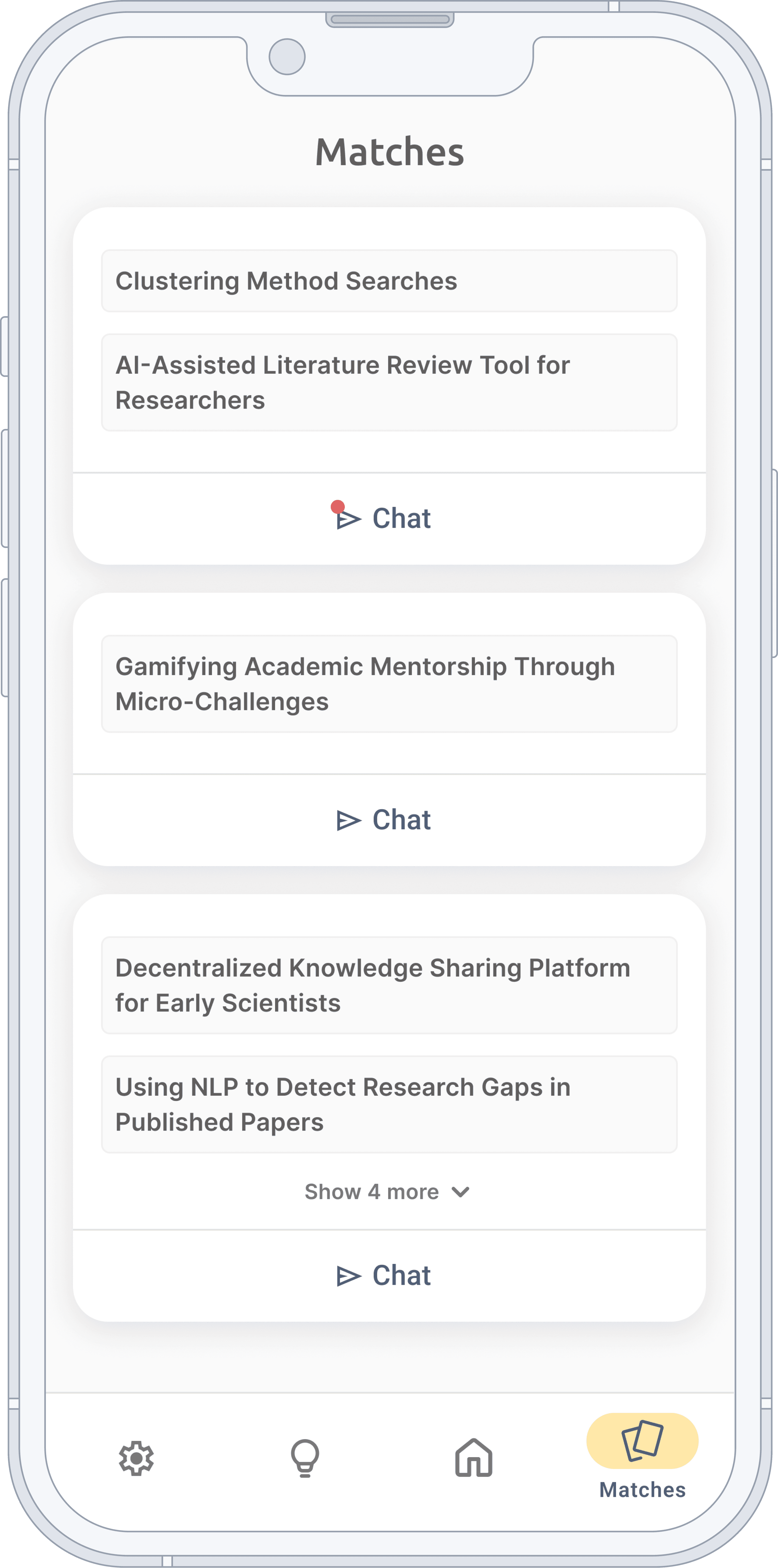
Because profiles are anonymous, each match is displayed through the ideas/projects you have liked from another user, not their name.
This keeps interactions bias-free while letting users choose which ideas to explore or start a chat about.
Because profiles are anonymous, each match is displayed through the ideas/projects you have liked from another user, not their name.
This keeps interactions bias-free while letting users choose which ideas to explore or start a chat about.
Because profiles are anonymous, each match is displayed through the ideas/projects you have liked from another user, not their name.
This keeps interactions bias-free while letting users choose which ideas to explore or start a chat about.
My Ideas
My Ideas
My Ideas
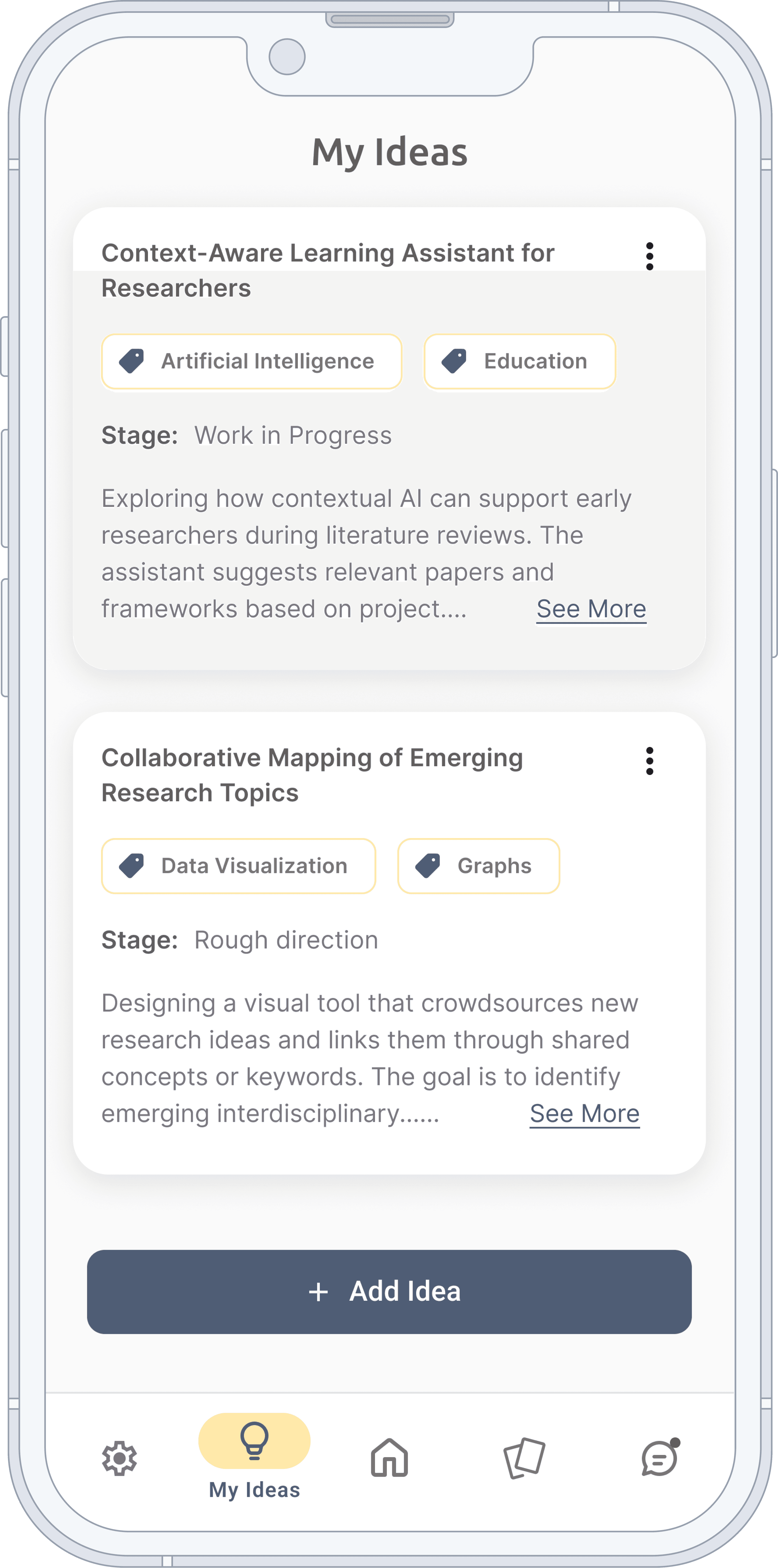
And a simple hub to manage your own projects and ideas
And a simple hub to manage your own projects and ideas
And a simple hub to manage your own projects and ideas
The prototype held up smoothly in usability tests (n=8) , but some users felt unsure about where to start, so I created a quick onboarding tutorial to remove that friction.
The prototype held up smoothly in usability tests (n=8) , but some users felt unsure about where to start, so I created a quick onboarding tutorial to remove that friction.
The refined prototype became the demo and build reference for the team.
The refined prototype became the demo and build reference for the team.
Reflection
Reflection
Here is the thing about working with brilliant people: Their ideas often sound so convincing that it becomes very easy to skip validation. And to be honest, with the deadline and the exciting concept, I almost did the same.
But data said otherwise. Anonymity can remove bias, but it also kills trust. In the end I had a choice: just say yes and ship what was asked, or act like a real product partner and make the team ponder on it and rethink. I chose the latter, even though it meant potentially annoying my team members.
Here is the thing about working with brilliant people: Their ideas often sound so convincing that it becomes very easy to skip validation. And to be honest, with the deadline and the exciting concept, I almost did the same.
But data said otherwise. Anonymity can remove bias, but it also kills trust. In the end I had a choice: just say yes and ship what was asked, or act like a real product partner and make the team ponder on it and rethink. I chose the latter, even though it meant potentially annoying my team members.